* Monaco (1st) 89.68 years
* Japan (3rd) 83.91
* Australia (9th) 81.90
* Canada (12th) 81.48
* New Zealand (25th) 80.71
* United Kingdom (30th) 80.17
* United States (51st) 78.49
* Chad (225th) 48.69
Source: CIA Factbook
* Monaco (1st) 89.68 years
* Japan (3rd) 83.91
* Australia (9th) 81.90
* Canada (12th) 81.48
* New Zealand (25th) 80.71
* United Kingdom (30th) 80.17
* United States (51st) 78.49
* Chad (225th) 48.69
Source: CIA Factbook
It’s a valid question. We all know that there are climate change deniers and climate change proponents out there. And they each seem to be deeply convinced of their point of view.
One could get cynical and jaded regarding the issue and it’s easy to believe that these ongoing arguments are just the same old arguments being hashed out over and over again with neither side budging year after year.
But is it a static and unchanging argument?
Well, I’m going to tell you that it is not. And I’m going to give you the proof. And afterwards, you can ask yourself if, perhaps, you’ve been a bit too lackadaisical about all of this.
When it comes TIME to put your money and your belief down on a issue like this, who would you trust?
Would you trust the tree-huggers who seem to go on and on about saving nature – with seemingly no regard for preserving our jobs, our communities and our way of life?
Or would you trust the big oil, gas and coal corporations who tell us there’s nothing to worry about but whose profits are deeply dependent on all of us continuing to burn the fossil fuels they produce and sell to us?
Well, that’s a tough choice and it’s one we’ve been looking at for some time now.
But there are new players in this game now. And these new folks have some very serious money and responsibilities on the table. So, it is worth waking up again on this issue and seeing what they have to say.
Among these new players are the U.S. Pentagon, Lloyd’s of London and The World Bank, to name a few. I think you’d agree that in a world full of monkey’s, these are some of the gorillas.
All of them have decided that the threat of Global Climate Change sounds serious enough that they’ve commissioned major studies to get at the truth of the matter for their own good. And it is not surprising that they would.
The World Bank makes huge investments around the world and the success or failure of these investments may hinge on whether the threat of Global Climate Change is real.
Lloyd’s of London sells insurance. And when they do so, they are making a bet that they know what the odds are that a disaster might happen. The fact that they’ve been in business for centuries, and that they are one of the world’s largest insurance firms, says that they know what they are doing when it comes to estimating risk.
And, of course, the U.S. Pentagon has the enormous responsibility of making sure that United States is, and remains, secure in the face of a changing world.
The studies they’ve commissioned have all come back saying that we, as a world, are proceeding into some very deep and serious problems. These studies have confirmed what the environmentalists and the climate scientists have been trying to tell us for more than twenty plus years now.
But don’t trust what I have to say on all of this. Read it for yourself. Here are the direct links:
The World Bank:
http://climatechange.worldbank.org/
Lloyd’s of London: http:
//www.lloyds.com/~/media/3be75eab0df24a5184d0814c32161c2d.ashx
U.S. Pentagon:
http://www.cna.org/sites/default/files/news/FlipBooks/Climate%20Change%20web/flipviewerxpress.html
The central point in all of this is that Global Climate Change is real and it is a MAJOR threat to all of our futures.
That said, the worst aspects of these threats may still be a decade or two away. Many of us are old enough (myself included) to think that none of this may matter to us.
But reflect for a moment on those you love. Your sons, your daughters, your grandchildren and your relatives and their families and all the other folks you care about.
Just imagine the kind of a world we are on the brink of bequeathing them if all of this is true. I know that none of you would willingly leave your dependents in dire straits. So, you owe it to yourself and to them to open your mind and take a good look at these issues again, my friends.
Here we’re going to learn that the world is well on its way to being 4°C [7.2°F] warmer by the end of the century.
Ironically, twenty years ago in 1992, the climate scientists who met in Rio then warned that the world could simply not sustain a temperature increase of more than 2°C with out major consequences.
Of that 2°C, we’ve now risen .8°C.
The World Bank Report says:
A 4°C warmer world can, and must be, avoided – we need to hold warming below 2°C. Lack of action on climate change threatens to make the world our children inherit a completely different world than we are living in today. Climate change is one of the single biggest challenges facing development, and we need to assume the moral responsibility to take action on behalf of future generations, especially the poorest.
A 4°C [7.2°F] warmer world would also suffer more extreme heat waves, and these events will not be evenly distributed across the world, according to the report.
Sub-tropical Mediterranean, northern Africa, the Middle East, and the contiguous United States are likely to see monthly summer temperatures rise by more than 6°C [10.8°F]. Temperatures of the warmest July between 2080-2100 in the Mediterranean are expected to approach 35°C [95°F]– about 9°C [16.2°F] warmer than the warmest July estimated for the present day. The warmest July month in the Sahara and the Middle East will see temperatures as high as 45°C [113°F], or 6-7°C [10.8-12.6°F] above the warmest July simulated for the present day.
Hotter weather could in turn lower crop yields in a 4°C [7.2°F] world—raising concerns about future food security. Field experiments have shown that crops are highly sensitive to temperatures above certain thresholds. One study cited in the report found that each “growing degree day” spent at a temperature of 30°C [86°F] degrees decreases yields by 1% under drought-free rain-fed conditions.
The report also says drought-affected areas would increase from 15.4% of global cropland today, to around 44% by 2100. The most severely affected regions in the next 30 to 90 years will likely be in southern Africa, the United States, southern Europe and Southeast Asia, says the report.
The Lloyd’s of London Report says:
If the sea level were to rise just four meters due to climate change, almost every coastal city in the world would be inundated.
In publishing this report, it is not Lloyd’s intention to take a particular position, or to support a specific scenario. We simply aim to present the facts from the most reliable sources in a way which we hope will be helpful for those who trade in, and with, our market. We also want to generate debate about the specific steps which we might take as an industry to prepare for the increasing volatility of the climate.
Although debate continues, the growing body of evidence on greenhouse gases suggests that significant climate change is inevitable. Even if we stopped producing greenhouse gas emissions immediately, we would still experience rising temperatures for decades to come and sea temperatures will continue to rise for many centuries, due to inertia in the climate system.
We might hope that extreme ‘tipping points’ – the point beyond which change cannot be reversed – can be avoided. However, evidence so far must lead us to conclude that some level of change has already occurred and that it will continue to occur, perhaps at a higher level than previously thought.
One recent paper in Nature warns starkly: “Global warming may proceed at or even above the upper extreme of the range projected by the Intergovernmental Panel on Climate Change.”
The Pentagon Report says:
Projected climate change poses a serious threat to America’s national security. The predicted effects of climate change over the coming decades include extreme weather events, drought, flooding, sea level rise, retreating glaciers, habitat shifts, and the increased spread of life-threatening diseases. These conditions have the potential to disrupt our way of life and to force changes in the way we keep ourselves safe and secure.
The nature and pace of climate changes being observed today and the consequences projected by the consensus scientific opinion are grave and pose equally grave implications for our national security. Moving beyond the arguments of cause and effect, it is important that the U.S. military begin planning to address these potentially devastating effects. The consequences of climate change can affect the organization, training, equipping, and planning of the military services. The U.S.
military has a clear obligation to determine the potential impacts of climate change on its ability to execute its missions in support of national security objectives.
In the national and international security environment, climate change threatens to add new hostile and stressing factors. On the simplest level, it has the potential to create sustained natural and humanitarian disasters on a scale far beyond those we see today. The consequences will likely foster political instability where societal demands exceed the capacity of governments to cope.
Unlike most conventional security threats that involve a single entity acting in specific ways and points in time, climate change has the potential to result in multiple chronic conditions, occurring globally within the same time frame. Economic and environmental conditions in already fragile areas will further erode as food production declines, diseases increase, clean water becomes increasingly scarce, and large populations move in search of resources. Weakened and failing governments, with an already thin margin for survival, foster the conditions for internal conflicts, extremism, and movement toward increased authoritarianism and radical ideologies.
You might wonder why I am writing this? What do I expect you, my readers, to do with this information? Maybe you suspect that I am hoping that all of you will undergo a sudden conversion and become rabid tree-huggers?
Nope, it is none of those and this is not a partisan based appeal either. This is decidedly not about Conservative vs. Liberal or Religious vs. Secular.
It may be true, in general, that Liberals have been quicker than Conservatives to embrace a belief in Global Climate Change. But, in truth, neither side’s response to these problems has been anything other than tepid and lukewarm. The best you can say for the Liberals is that they are still willing to “talk” about it though they’ve showed no serious signs of engaging it. And with the Conservatives, it’s even worse as they are seeming moving away from the issues.
In 2008 the Republican party platform at least included language that called for a “decrease in emissions, reduction of excess greenhouse gases in the atmosphere and mitigation of the impact of climate change“.
By this most recent election cycle, there was a major shift away from this point-of-view. The Republican 2012 platform eliminated any reference to climate change with the exception of prohibiting the “EPA from moving forward with new greenhouse gas regulations.” Their platform also supported vice presidential candidate Paul Ryan’s accusation that climatologists use “statistical tricks to distort their findings and intentionally mislead the public on the issue of climate change.”
It is deeply scary that the Republican Party, that represents half of the American population, is in active denial of Global Climate Change. And it is only slightly better that the Democrats at least still profess to still “believe” in the issue. But all President Obama has really offered up in terms of improving things is to implement some better mileage requirements for cars. In truth, he’s literally just messing with the deck furniture while the Titanic sails on to its appointment with an iceberg called Global Climate Change.
Folks, I’ll repeat myself. This isn’t a partisan rant, this isn’t about Republicans vs. Democrats. The issues we’re talking about here cut a lot deeper than any of that.
What this is about is trying to convince you that these threats are terrifying and real, And that they are going effect everyone and everyplace on this planet before long and that some of the biggest power players and smartest people on the planet are coming to that profound realization.
This is about getting you to think about who you vote for because that is the leverage that each of us in a democratic society has to affect things. Political parties don’t lead. They simply reflect the beliefs of those whom they consider their electorate. You, the voters, have to change and your parties will follow. Show your change by who you vote for.
I urge you to vote for people, regardless of whether they are conservative or liberal, who’ve
A. Shown that they understand the issues around Global Climate Change.
B. And shown that they believe the issues are real and hugely important.
C. And shown that they are motivated to do something about it.
Many of our current politicians on both sides of the aisle just cannot seem to see that the world is changing around us in dangerous ways. For whatever reason, many of our current politicians are in serious denial about the coming consequences of Global Climate Change.
And in their denial they are frittering away all of our futures. And most especially they are frittering away the futures of our children.
If you still have doubts about all of this, then go back and reread the reports I’ve referenced by the Pentagon, The World Bank and Lloyd’s of London again. And then reflect on who these organizations are. They are not tree-huggers or environmental destroyers. And they most definitely are not here with ulterior motives to pull the wool over our eyes.
And these three organizations are not the only ones. Governments and major business organizations all over the world are beginning to worry about what’s coming.
Wouldn’t it be nice if we could get the people we elect to wake up and smell the coffee too?
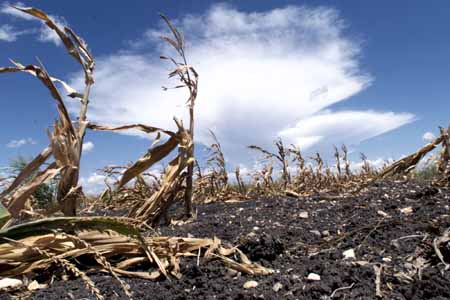
The future?
The worst US drought in decades has deepened again after more than a month of encouraging reports of slowly improving conditions, a drought-tracking consortium said today, as scientists struggled for an explanation other than a simple lack of rain.
While more than half of the continental US has been in a drought since summer, rain storms had appeared to be easing the situation week by week since late September. But that promising run ended with today’s weekly US Drought Monitor report, which showed increases in the portion of the country in drought and the severity of it.
The report showed that 60.1 per cent of the lower 48 states were in some form of drought as of Tuesday, up from 58.8 per cent the previous week. The amount of land in extreme or exceptional drought the two worst classifications increased from 18.3 per cent to 19.04 per cent.
The Drought Monitor’s map tells the story, with dark red blotches covering the center of the nation and portions of Texas and the Southeast as an indication of where conditions are the most intense. Those areas are surrounded by others in lesser stages of drought, with only the Northwest, Florida and a narrow band from New England south to Mississippi escaping.
– more… ➡
Such good news. My son, Chris, was granted a one-year work visa for New Zealand today. We are all really happy about that! Yay!
dennis
– The New Zealand Listener Magazine has an editorial in their September 22-28, 2012 edition entitled:
– It makes a lot of good points and I recomend reading it if you are a New Zealander.
– It repeats a point that I’ve made on this Blog for a long time. And that is that sooner or later, the same factors that brought me, and numerous other new immigrants to NZ, are going to become apparent to greater and greater numbers of folks and the rush to immigrate to NZ is going to be on.
– There will be, in the not too distant future, a lot of reasons to run away from other locations out in the world. Rising sea levels, water shortages, food shortages, extreme weather and widening social chaos will be among those factors. We’ve had economic and human rights refugees in the past. These will increase in the future and to their numbers will be added environmental refugees.
– Right now, NZ is not in bad shape.
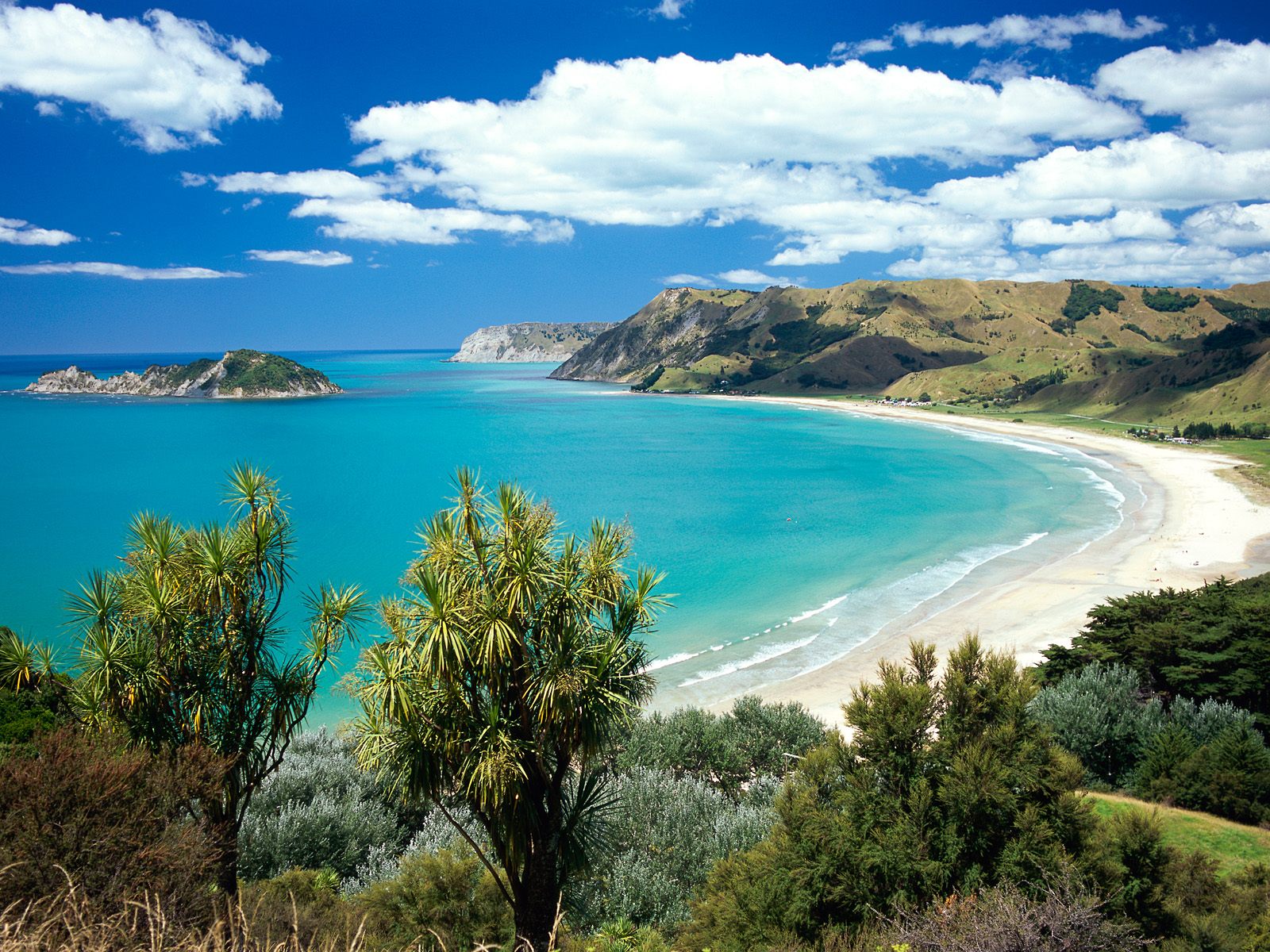
Our beautiful refuge
– We generate the majority of our energy needs from benign sources such as hydroelectric and geothermal.
– We also generate two or more times the food that we consume which is why we can do a handsome amount of agricultural exporting.
– We are also protected from the worst of the weather changes because our climate is strongly buffered by the fact that we are an island nation in the midst of a huge surrounding ocean.
– We also have a fairly homogeneous culture which is good. It means that we, as a people, have fairly uniform ideas about how things should work.
– And, finally, we are protected from unwanted and forced immigration by that same ocean that surrounds us. Australia is the closest and they are 1000 miles away and most of the increasingly desperate world lies beyond them on the far side.
– But we will not remain in good shape if we don’t, as a nation, look out for ourselves.
– Should we let foreigners buy farmland here?
– The authors of the article think not and I agree with them. If push comes to shove in a nastier future and we need the food that grows here to survive, we will not be happy if a significant portion of it belongs to folks from overseas and they want to ship it home to their own people.
– Should we let offshore folks own significant portions of our industries and our means of production? I think not. If the world gets tough, they won’t be asking ‘how can they help us with those things’. They will be asking how those things can be used to help them.
– Should we let large numbers of folks immigrate into NZ from cultures significantly different from ours? Currently, we are not split, say, over common law verses Sharia Law or whether women should be first class citizens here or not. Or whether or not everyone should be able to practice their own religion so long as they leave other folks alone. But, if we don’t watch our immigration rates and types, this situation could get away from us. For a more detailed discussion of these ideas see here: ➡
– It is indeed sad that we might need to start thinking this way. Is seems so isolationist and selfish and New Zealand has always been a compassionate and generous nation.
– But, tough times are coming. The question is not ‘if‘ but simply ‘when‘. And the question is not, ‘is it going to be bad?‘. The fact is that it is going to be bad and the estimates of how bad it is going to be are only getting worse as we, as a world, keep continuing along without reacting to the dangers ahead.
– Please read the article.
– We in NZ are probably going to be some of the very luckiest people on the planet when the wheels come off because of our physical isolation, our low population, our excess food production capability and our well organized society. But those factors are not going to be enough to save us if we don’t look out for ourselves.
– The Arabs have an expression that comes to mind here: “Trust in God, but tether your camel.“
– dennis
– Late breaking: Chinese want to buy into Fonterra. See ➡
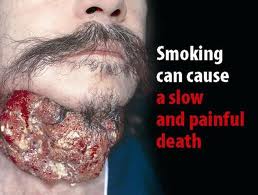
Want some?
– There’s a campaign running here in New Zealand on TV and, perhaps on radio and newsprint as well. It’s called AgreeDisagree.co.nz and it’s put on by British American Tobacco New Zealand. It’s a subtle and devious plot to convince voters here in New Zealand that letting the New Zealand government legislate cigarette packaging is tantamount to the government taking away people’s choice and freedom to decide things for themselves.
Thus they try to convince people that the issue they are defending is the right of the people to make their own choices.
But, in fact, they are protecting their own profits. They are placing their rights to their profits above the health of the people they are selling their products to. And they are placing their rights to their profits above the rights of a government to protect it own people against predatory Capitalism.

Want this?
There are growing complaints about this advertising campaign. As I agree there should be. This sort of thing is repugnant. These folks are selling products that are clearly shown to damage other people’s health.
If you have any doubts about what these snakes are up to (how do they face themselves in the mirror each morning?), then check this story out.
– dennis
Click here: ➡ for the U. S. Debt Clock numbers.
– Research thanks to Alex C.

...that's the way you do on the M. T. V.
I’ve been watching developments with the proposed Trans Pacific Strategic Economic Partnership Agreement (TPP) between the United States, New Zealand, Brunei, Australia, Chile, Singapore, Peru, Vietnam, Canada, Mexico and Malaysia. Japan, Korea, Taiwan and the Philippines have also expressed interest in joining.
The TPP negotiations have been largely held in private so people here in New Zealand have only a small idea of what our government is putting out on the table as negotiating chips. The same is apparently true in the U.S. and and I would strongly suspect it is also true in the other negotiating countries.
In the U.S., various groups are speaking out against the TPP.
In May 2012, a group of 30 legal scholars, critical of the Office of the United States Trade Representative‘s “biased and closed” TPP negotiation process and proposed intellectual property-related provisions, publicly called upon Ambassador Kirk to uphold democratic ideals by reversing the “dialing back” of stakeholder participation and to release negotiating texts for public scrutiny.
On May 23, 2012, United States Senator Ron Wyden introduced S. 3225, proposed legislation that would require the Office of the United States Trade Representative to disclose its TPP documents to all members of Congress. Senator Wyden said,
“The majority of Congress is being kept in the dark as to the substance of the TPP negotiations, while representatives of U.S. corporations—like Halliburton, Chevron, PHRMA, Comcast, and the Motion Picture Association of America—are being consulted and made privy to details of the agreement. […] More than two months after receiving the proper security credentials, my staff is still barred from viewing the details of the proposals that USTR is advancing. We hear that the process by which TPP is being negotiated has been a model of transparency. I disagree with that statement”.
Let’s get that straight. Halliburton, Chevron, PHRMA, Comcast, and the Motion Picture Association of America can all see the current texts of the negotiations – and we cannot?

At a public forum on 6 July 2011, legal experts in New Zealand presented their concerns that the agreement could undermine law regarding Maori culture, genetic modification, copyright, and remove the subsidized medicine New Zealanders have access to through Pharmac.
More about this in a moment.
But perhaps the most worrying of the potential problems are the Investor-state arbitration provisions of the TPP that have been revealed from leaked documents. This is from the Wikipedia article on the TPP:
The leaked draft treaty also caused a stir among anti-globalization groups that are opposed to investor-state arbitration, which permits foreign investors to bring claims directly against states before panels of trade arbitrators if they perceive public policy or legislative actions have expropriated their property or treated their investment (defined broadly enough to include most forms of intellectual property) “unfairly”. Those groups and other critics of the investment protection regime argue that traditional investment treaty standards are incompatible with environmental law, human rights protection, and public welfare regulation, meaning that TPP will be used to force states to lower standards for e.g. environmental and workers protection – or be sued for damages. As a worst case scenario, investor-state arbitration gives transnational corporations powers to trump the sovereign powers of nations and states and hold back important policy developments related to sustainability and a clean energy future. The Australian government and its negotiators have stated that they will not be agreeing to investor state dispute settlement provisions that give greater rights to foreign than domestic businesses in the TPP.
Well, just considering the Investor-state arbitration provisions, one can see that if New Zealand enters into these agreements and then later NZ, for example, wants to legislate that cigarette packages have to be plain with no advertisements and with bold warnings about the health risk, then the tobacco companies in the U.S. could sue us for damages under these provisions.
They would say that our new legislation undercut their profits from selling cigarettes and thus we’d hurt their financial interests. Does that sound like something any country should open itself to?
Governments should be free to make whatever legislation they see fit for the betterment of their own people. That’s what being a sovereign nations is all about, really.
In this proposed situation, government decisions would be checked by their possible economic consequences on the economic interests of foreign corporations.
Canada
Canada has signed a new agreement that comes into effect at the end of October. It’s called The Canada-China Foreign Investment Promotion and Protection Act (FIPPA). It seems to be a model of what not to do to me.
In one instance, it prevents Canada from doing anything that will infringe on Chinese profits from the Enbridge Northern Gateway pipeline. These limitations will continue for 31 years.
In an article from the Vancouver Sun it says:
“This treaty, in effect, will pre-empt important elements of the debate of the Northern Gateway pipeline and may frustrate in a very significant way the ability of the current BC government or any future government—if the NDP were to win in spring—from stopping that pipeline or bargaining a better deal for BC,” said Gus Van Harten, an Osgoode Law professor who specializes in international investment law.
Van Harten noted that arbitrators in foreign investment agreement disputes will most likely judge in favour of Chinese investors in cases where the host country attempts to impose new or updated regulations that may interfere with the investor’s bottom line.
“If this treaty comes into effect, and there’s any Chinese ownership whatsoever in assets related to this pipeline—minority ownership, ownership we generally don’t know about—then Canada will be exposed to lawsuits under this treaty, because the BC government will be discriminating against a Chinese investor, which is prohibited by the treaty.”
The treaty will protect investors’ rights for 31 years as of November 1.
I can see that corporations who make significant international investments in infrastructure will want to control things to protect their investments and to guarantee their profits. These are corporations, after all, so such behaviors should be expected without question.
But why would sovereign governments want to sign negotiations that will limit their ability to make laws that are in the best interests of their own peoples?
Could it be (gasp) money?
When I first started considering all of this, I had a hard time wrapping my head around the idea that anyone negotiating on behalf of a sovereign government could possibly think treaties like this would be a good idea.
Then the light turned on when I thought about who our negotiators are.
Who is it these days who have risen so high in national governments that they have a seat at the table where such negotiations are done?
Business people, my friends, usually it is business people.
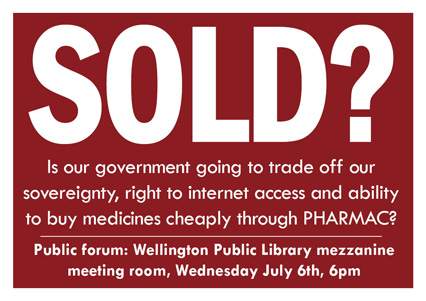
Trans Pacific Partnership
Here in New Zealand, we are led by John Key in a conservative government which is very business-friendly.
Canada is currently led by the Harper government of which we could very much say the same.
And the United States, as I’ve asserted for some time, has basically been captured by, and is largely under the control of, corporations and their minions; the business people.
So, John Key is a major businessman here in New Zealand. A millionaire who has made his money through business.
So, if he leads a negotiating team to the TPP negotiations that is willing to put our subsidized pharmaceuticals (PHARMAC) on the table as a negotiating chip, then he’s put something out there that the other side (big Pharma in the U.S.) would like. And that’s free access to our NZ markets where they can sell us our pharmaceuticals for the same outrageous prices they sell them to the U.S. public for.
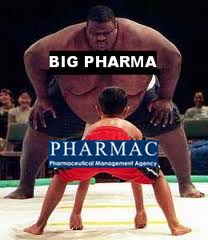
Unequal contest
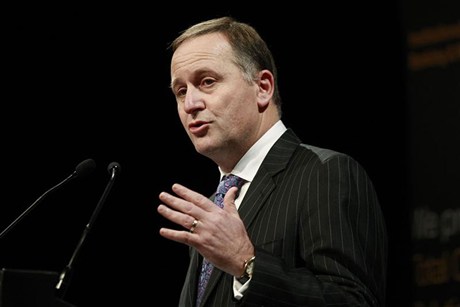
John Key
In exchange, John Key, and the other business types he’s allied with here in New Zealand, will get access to new offshore markets through the TPP where they can sell the sorts of things they like to do business in.
In the end, by negotiating away something that belongs to all of us in New Zealand (PHARMAC), they will reap huge personal profits.
Now, they will say that some of that new money they will make will ‘trickle-down‘ into the pockets of other New Zealanders and that we will all be better off for it in the end.
Yeah right! It’s been a long time since I’ve believed in ‘trickle-down’ anything other than political bullshit. Trickle-down is just a conscience-saving mental ploy of the rich to try to make their profiting at our expense more palatable.
Is through international free trade agreements. Watch for it – coming to nation like yours soon.
FAIR USE NOTICE
This site contains copyrighted material the use of which has
not always been specifically authorized by the copyright owner.
I am making such material available in my effort to advance
understanding of environmental, political, human rights, economic,
democracy, scientific, and social justice issues, etc.
I believe this constitutes a 'fair use' of any such copyrighted
material as provided for in section 107 of the US Copyright Law. In
accordance with Title 17 U.S.C. Section 107, the material on this
site is distributed without profit to those who have expressed a prior
interest in receiving the included information for research and
educational purposes.
For more information go to: http://www.law.cornell.edu/uscode/17/107.shtml
If you wish to use copyrighted material from this site for
purposes of your own that go beyond 'fair use', you must obtain
permission from the copyright owner.