Archive for the ‘CrashBlogging’ Category

070605 – Tuesday – Through a future, darkly

Tuesday, June 5th, 2007

I am, by nature, an upbeat person. I’m rarely depressed and when I am, it only lasts a day or so. I have to admit though that blogging on our coming future wears at me at times.

If we were facing a future that we couldn’t do anything about, then I could accept that stoically. And if we were facing a future with enormous problems but we were dealing with them, however slowly, then I could accept that as well. But, we’re facing a terrible future which we could avoid, and which we are not. Knowing that and knowing what’s at stake wears at my heart.

Today, I posted three more briefings from Stratfor on samadhisoft here: , here: and here: .

The first is reporting on chaos in the Ukraine where the Rule of Law, weak at best, is rapidly fading and giving way to might-is-right strategies. Not a good sign for Central Asia.

The second discusses the huge mess swirling around the US, Iran and Iraq. There are many players in this game and no one seems to hold a winning hand. And, in the mean time, some of our best, idealistic and naive young people are giving up their lives – but for exactly what it’s hard to say.

It’s the third one, however, that is the most discouraging to me. Global climate change is a problem that simply doesn’t care if we understand, doesn’t care if we are preoccupied over questions of who should do what first and who’s responsible for things. It doesn’t care if it is an election year or if corporate profits are going to rise or fall.

The mismatch between the magnitude of the threat and our dithering responses to it are going to make for amazing reading in future history … if we have a future.

So, the US has now effectively killed the Kyoto Treaty, if we are to believe Stratfor’s analysis in favor of setting up a Pacific alignment group with China, India, Australia and Canada. In terms of possobly being effective, this is a powerhouse group because between themselves, they are responsible for emitting half the world’s greenhouse gases. But the promise of this group is really slim. The US has always avoided caps on greenhouse emmissions on favor of voluntary measures and China, just last week, announced its plans for dealing with global climate change and made it quite clear that while it wants to do better, it will do nothing that slows its economic growth or dampens the aspirations of its huge population for greater wealth and consumption.

Kyoto previously had the hope of evolving into Kyoto II with all the incremental improvements that accrue through experience and the hope of bringing major players on board who had until now been slacking. But, now the US administration’s refusal to comprehend the seriousness of the threat combined with some deft political footwork has essentially gutted the one semi-effective international protocol focused on mounting a response to global climate change.

Unless there’s another sea-change among the world’s nations concerning how to deal with global climate change, then from here out we will have gestures, hand-waving, flag-waving, promises and every type of political compromise required to ensure that our consumption patterns as a species go on unabated until the consequences of our inattention are painted in technicolor strokes of death and environmental destruction which we can no longer ignore.

National Security and the Threat of Climate Change

Monday, June 4th, 2007

– There are people of every flavor with strong opinions about Global Climate Change out there. Just Googling the subject will expose you to the full range of supporters and deniers of the idea that mankind’s activities are changing the global climate.

– Amid all this controversy, I’ve chosen to align my beliefs with what the majority of the world’s scientists believe. And that is that humanity’s activities are affecting global climate and the changes are likely to be ugly (see IPCC Reports ➡).

– But there are other ways to get at the truth through all the rhetoric and hand waving and that is to ask yourself who is it that has a deep and vested interest in discovering the truth rather than pandering to political or monetary forces. Well, the insurance industry is one and military think tanks are another. Neither of these entities can afford to be wrong because the bottom line of their very survival is directly linked to their ability to discern the future accurately.

– Here’s a report from the CNA Corporation, a military think tank based out of Alexandria, Virginia. This is not the first time I’ve seen assessments of the likely impact of global climate change on national security matters and it won’t be the last, I’m sure.

— — — — —

During our decades of experience in the U.S. military, we have addressed many national security challenges, from containment and deterrence of the Soviet nuclear threat during the Cold War to terrorism and extremism in recent years.

Global climate change presents a new and very different type of national
security challenge.

Over many months and meetings, we met with some of the world’s leading climate scientists, business leaders, and others studying climate change. We viewed their work through the lens of our military experience as warfighters, planners, and leaders. Our discussions have been lively, informative, and very sobering.

Carbon dioxide levels in the atmosphere are greater now than at any time in the past 650,000 years, and average global temperature has continued a steady rise. This rise presents the prospect of significant climate change, and while uncertainty exists and debate continues regarding the science and future extent of projected climate changes, the trends are clear.

The nature and pace of climate changes being observed today and the consequences projected by the consensus scientific opinion are grave and pose equally grave implications for our national security. Moving beyond the arguments of cause and effect, it is important that the U.S. military begin planning to address these potentially devastating effects. The consequences of climate change can affect the organization, training, equipping, and planning of the military services. The U.S. military has a clear obligation to determine the potential impacts of climate change on its ability to execute its missions in support of national security objectives.

Climate change can act as a threat multiplier for instability in some of the most volatile regions of the world, and it presents significant national security challenges for the United States. Accordingly, it is appropriate to start now to help mitigate the severity of some of these emergent challenges. The decision to act should be made soon in order to plan prudently for the nation’s security. The increasing risks from climate change should be addressed now because they will almost certainly get worse if we delay.

To the full report:

To a number of news reports about this report:

, , , , ,

– All of these stories were drawn from the first page of a Google search for ‘National Security and the Threat of Climate Change‘. There’s a TON of stuff out there if you go looking.

– Thx to Michael D. for the lead to this story.

US Control Strategies May Make Flu Epidemics Worse, Study Shows

Friday, June 1st, 2007

Science Daily Regular as clockwork, the flu arrives every year. And, according to the national Centers for Disease Control and Prevention, 5 to 20 percent of the U.S. population on average will come down with it. About 36,000 people will die.

But among health experts, a bigger concern than the seasonal flu is an outright flu pandemic, such as a human strain of avian flu. And officials say it is not a question of if such a health crisis will come but when. Are we prepared? In a word, say three UCLA researchers, no.

In a report to be published in the peer-reviewed journal PLoS Computational Biology and currently available online, Sally Blower, a professor at the Semel Institute for Neuroscience and Human Behavior at UCLA, and Romulus Breban and Raffaele Vardavas, postdoctoral fellows in Blower’s research group, used novel mathematical modeling techniques to predict that current health policy — based on voluntary vaccinations — is not adequate to control severe flu epidemics and pandemics unless vaccination programs offer incentives to individuals.

More…

See also 1 ➡, 2 ➡, 3 ➡, 4 ➡, & 5 ➡

China Investigates Contaminated Toothpaste

Wednesday, May 30th, 2007

See also: 1 ➡, 2 ➡, 3 ➡, 4 ➡, & 5 ➡

— — — — —

DANYANG, China, May 21 — Chinese authorities are investigating whether two companies from this coastal region exported tainted toothpaste as more contaminated product, including some made for children, has turned up in Latin America.

A team of government investigators arrived here Sunday afternoon and closed the factory of the Danyang City Success Household Chemical Company, a small building housing about 30 workers in a nearby village, according to villagers and one factory worker. The government also questioned the manager of another toothpaste maker, Goldcredit International Trading, which is in Wuxi, about an hour’s drive southeast of here.

No tainted toothpaste has been found in the United States, but a spokesman for the Food and Drug Administration said yesterday that the agency would be taking “a hard look” at whether to issue an import alert.

Authorities in the Dominican Republic said they seized 36,000 tubes of toothpaste suspected of containing diethylene glycol, an industrial solvent and prime ingredient in some antifreeze. Included were tubes of toothpaste marketed for children with bubble gum and strawberry flavors sold under the name of “Mr. Cool Junior.”

Toothpaste containing the toxic solvent was also found in Panama and Australia in the last week.

More…

– This article is from the NY Times and they insist that folks have an ID and a PW in order to read their stuff. You can get these for free just by signing up. However, recently, a friend of mine suggested the website bugmenot.com :arrow: as an alternative to having to do these annoying sign ups. Check it out. Thx Bruce S. for the tip.

Coal-fired Power On the Increase — And With It CO2 Emissions

Tuesday, May 29th, 2007

-Read this and then go back and read The Power of Green. The China Price is the key factor here – and we currently don’t have a way to deflect that bullet.

— — — — —

According to a report by the Natural Resources Defence Council, 39% of the carbon dioxide emitted into the atmosphere from all sources in the United States in 2004 originated from the top 100 US electric power producers. Given that figure and all the recent media attention on climate change, one would think that US electric utility companies would be taking serious proactive steps to reduce their CO2 emissions. Unfortunately, the reality is quite different.

According to a March 22, 2007 article in the Christian Science Monitor, Global Boom in Coal Power and Emissions“, 37 countries plan to add new coal-fired capacity over the next 5 years. This is worrisome since burning coal generates 6% more CO2 per kilowatt-hour than burning petroleum and 52% more CO2 than natural gas (from the US Energy Information Agency). On a worldwide basis, the shift to more coal-fired power plants will result in an additional 1.2 billion tons of CO2 missions per year by 2011. The United States will have the largest increase in CO2 emissions from new coal-fired electric power plants on both a percentage and an absolute tonnage basis where nearly 38,000 megawatts of new coal-fired capacity is slated to come online resulting in an additional 230 million tons of CO2 emissions per year. Worldwide, by 2012, there will be approximately 7500 coal-fired power plants emitting 9 billion tons of CO2 annually, compared to 31 billion tons from all sources.

The central driver behind more coal-fired power generation is coal’s lower price per kilowatt and greater price stability over natural gas and petroleum fuel. Plus coal is abundantly available and poses fewer national security issues.

More…

More Bad News From NASA – Arctic Replaced Very Little Thick Sea Ice In 2005

Tuesday, May 29th, 2007

A new NASA study has found that in 2005 the Arctic replaced very little of the thick sea ice it normally loses and replenishes each year. Replenishment of this thick, perennial sea ice each year is essential to the maintenance and stability of the Arctic summer ice cover.

The findings complement a NASA study released in fall 2006 that found a 14-percent drop in this perennial ice between 2004 and 2005. The lack of replenishment suggests that the decline may continue in the near future.

More…

Vast Region Of Antarctic Melted In 2005

Tuesday, May 29th, 2007

A team of NASA and university scientists has found clear evidence that extensive areas of snow melted in west Antarctica in January 2005 in response to warm temperatures. This was the first widespread Antarctic melting ever detected with NASA’s QuikScat satellite and the most significant melt observed using satellites during the past three decades. The affected regions encompass a combined area as big as California.

More…

Nanotechnology Requires Immediate Changes In EPA, Experts Urge

Tuesday, May 29th, 2007

– I’ve written about this problem before. Nanotechnology holds huge promise but, I believe, it also holds huge risks.

– Anyone who’s read Engines of Creation by Drexler understands how incredibly powerful these new compounds will become as we master their creation. But anyone who’s read Vonnegut’s Cat’s Cradle and the story of Ice-9 will also realize how very badly things could go if we’re not careful.

– Scientists are and have been raising the alarm on this issue but thus far, not much has been done. In systems which are primarily profit driven, one can predict that not much will be done until a major problem manifests. Let’s hope it’s not a self-replicating, self-perpetuating something that we’ll be very unhappy we let out of the box.

— — — — —

Science Daily As the Environmental Protection Agency (EPA) recently stated, nanotechnology has evolved from a futuristic idea to watch to a current issue to address. And for this new technology’s enormous potential to improve everyone’s life to be realized, nanotechnology must be subject to an adequate oversight system—a system designed to identify and minimize any adverse effects of nano materials and products on health or the environment.

Regulatory oversight of nanotechnology is urgently needed and the Environmental Protection Agency (EPA) should act now, reports a new study released today. In EPA and Nanotechnology: Oversight for the 21st Century, former EPA assistant administrator for policy, planning and evaluation, J. Clarence (Terry) Davies, provides a roadmap for a new EPA to better handle the challenges of nanotechnology.

New nanomaterials and nanotechnology products are entering the market each week, and an adequate oversight system is necessary to identify and minimize any adverse effects of nano materials and products on health or the environment. Davies’ report sets out an agenda for creating an effective oversight system as nanotechnology advances–the technology that some have hailed as “the next industrial revolution.”

More…

Books mentioned:

070528 – Monday – CrashBlogging

Monday, May 28th, 2007

One of my readers sent me a link to a discussion thread in which folks were discussing New Zealand and other places where one might consider moving if they are worried about the world’s future over the next few decades. The link he sent leads to a fun read: I recommend it.

In reading the thread, I picked up a new term, CrashBlogger. It refers to any blogsite that focuses on future global calamities.

Needless to say, Samadhisoft would be considered a CrashBlogger site given its central theme which is the Perfect Storm Hypothesis. I liked the term so I’ve created a new chiclet button:

crash-blogger.png

which I added to the right sidebar of this site under General Plugs. I’ve created a category here on samadhisoft for CrashBlogging and anything I write that bears on the Perfect Storm Hypothesis will be so tagged in the future.

Anyone who wants a copy of this chiclet for their own use can find it here:

And, if you want to make chiclets of your own, I highly recommend this site:

And, finally, if you want to find ready made chiclets, try this site:

I also went to Technorati and checked for the terms CrashBlogger and CrashBlogging. There was nothing there- but I think there will be.

– thx again to Brian C. for input on this piece.

070528 – Monday – Why New Zealand cautionary feedback

Monday, May 28th, 2007

The other day, a reader wrote me about a piece I’d written entitled, Why New Zealand? He thought that I was a bit over the top with my praises of New Zealand as a destination.

New Zealand

Indeed, he had some good cautionary points about New Zealand as follows:

New Zealand owns a heap of public, external debt; all summed, this debt aggregates to 41% of the national GDP. I do not like reflecting on that percentage. Let’s reflect, anyway. National revenue now exceeds national expenditures, by $100 million. National expenditures budgets for payment of debt interest but not debt repayment. $100 million in public profits for a nation of 4 million: not sound.

New Zealand has a population growth rate of 1.12%. America, by due compare, only has a population growth rate of 0.89%. Which of these is healthy, and which of these is not? (Neither is healthy – of course. But one is in better accord with reality and one is not.)

New Zealand currently suffers from deforestation, soil erosion, top-soil depletion, and catabolic agricultural collapse. So does America. To quote a recently published academic paper which I tripped across, “A significant consequence of agricultural development has been the loss of native vegetation, including forests, wetlands and tussock grasslands, and biodiversity. Farming in New Zealand ranges from intensive to extensive practices. Intensive farming has higher concentrations of animal waste, fertilisers and pesticides and is implicated in the contamination of soil, groundwater and streams. Extensive farming of hill country has resulted in mass erosion, due to the loss of vegetation, resulting in the loss of topsoil and increased sedimentation of waterways. Agricultural development has been driven largely by economics, fluctuating with export prices and past government subsidies. There is currently increasing pressure for farmers to intensify due in particular to the global market for dairy products and niche market products, and improved technology.” Sound familiar? It sure does.

New Zealand is predominantly mountainous. Current estimates of arable land have you at only 6% of your land-mass. Current estimates of arable land in America, on the other hand, extend from 18% to 28% – and I am more inclined to believe 28%, given the still-tremendous fertility of California, the Great Plains, and the Empty Quarter. How will you feed 4 million, on only 16 thousand square kilometers of arable land? The isolation, which you value, also isolates your people from the protective value of emigration: if events on either island “go south,” you won’t have a South to emigrate to.

80% of the population lives in cities. That may be a good thing, for those sequestering themselves into the hills. I’m more inclined, however, to believe that city dependency breeds abstraction and alienation from the land, and ignorance of base necessities. It won’t be good, when ignorant city-hordes unravel across your terrain.

These all seem like good points – though I can’t comment on them as being true or false without doing some research.

I’ve spent a fair amount of time now in New Zealand and I’d still hold, even in the face of these negative points all being true, that New Zealand is arguably the best place in the world to run away to if you fear the coming Perfect Storm.

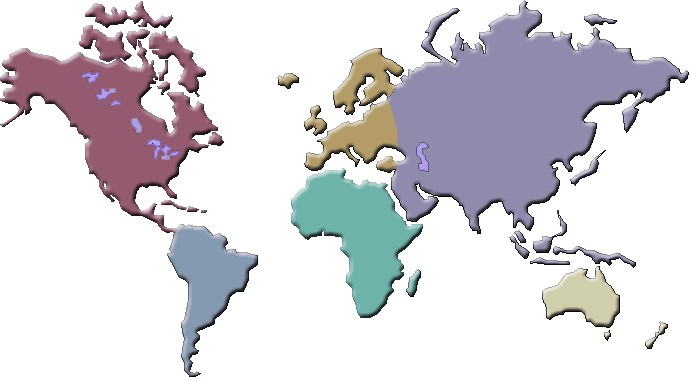
If you doubt this assertion, just lay a map of the world out and begin to go over every place you can think of that might provide a safe haven in a world of chaos. And for each place you consider, look at the points I’ve made in favor of New Zealand and the ones my correspondent has asserted against it.

The World

I have other correspondents in New Zealand who wish I’d just shut up on this subject <smile>.

They like that New Zealand is one of the world’s best kept secrets. And they don’t want to see paradise over run with refugees from the rest of the world’s insanities. And the truth is that for the most part, I agree with them. Fortunately, this Blog has a fairly small readership and immigration to New Zealand isn’t a subject I’m going to spend much time on from here on out.

If I can help alert people to the coming Perfect Storm, then that’s enough. Each of you will have to work out what you want to do about it on your own. I’d just caution you not to wait to bolt until the signs are unmistakable.

Homer sapiens ?? Bulletin of the Atomic Scientists - Doomsday Clock

One final note. My correspondent is immigrating to New Zealand from the US. Apparently, the negative points he’s cited, while worrisome, are not sufficient to dissuade him from recognizing a good thing <smile>.

Cheers!

– thx to Brian C. for his input on this piece