Archive for the ‘The Perfect Storm’ Category

This fatal complacency

Friday, May 11th, 2007

Climate change is already destroying millions of lives in the poor world. But it will not stop there

Desmond Tutu
Saturday May 5, 2007

Guardian

What if dealing with climate change meant more than a flick of a switch? Would our friends in the industrialised world think differently if the effects of climate change were worse than extended summer months and the arrival of exotic species? Cushioned and cosseted, they have had the luxury of closing their minds to the real impact of what is happening in the fragile and precious atmosphere that surrounds the planet we live on. Where climate change has occurred in the industrialised world, the effects have so far been relatively benign. With the exception of events such as Hurricane Katrina in 2005, the inhabitants of North America and Europe have felt just a gentle caress from the winds of change.

I wonder how much more anxious they might be if they depended on the cycle of mother nature to feed their families. How much greater would their concerns be if they lived in slums and townships, in mud houses, or shelters made of plastic bags? In large parts of sub-Saharan Africa, this is a reality. The poor, the vulnerable and the hungry are exposed to the harsh edge of climate change every day of their lives.

The melting of the snows on the peak of Kilimanjaro is a warning of the changes taking place in Africa. Across this beautiful but vulnerable continent, people are already feeling the change in the weather. But rain or drought, the result is the same: more hunger and more misery for millions of people living on the margins of global society. Even in places such as Darfur, climate change has played a role. In the semi-arid zones of the world, there is fierce competition for access to grazing lands and watering holes. Where water is scarce and populations are growing, conflict will never be far behind.

In so many of the countries where the poorest live, governments are ill-equipped to cope. Katrina was a challenge for the US, so why should we be surprised that the annual cyclone season off the east coast of Africa continues to stretch the governments of Mozambique and Madagascar to their limits? Where governments are weak, the reliance on humanitarian agencies is greater.

People who work for bodies such as the UN World Food Programme are finding their work is a humanitarian “growth industry”. Indeed, the numbers of people who know what it’s like to go hungry stands at more than 850 million, and they are still growing by almost 4 million a year. The increasing frequency of natural disasters makes the fight against hunger even more challenging. The World Bank estimates that the number of natural disasters has quadrupled from 100 a year in 1975 to 400 in 2005.

In the past 10 years, 2.6 billion people have suffered from natural disasters. That is more than a third of the global population – most of them in the developing world. The human impact is obvious, but what is not so apparent is the extent to which climatic events can undo the developmental gains put in place over decades. Droughts and floods destroy lives, but they also destroy schools, economies and opportunity.

Every child will remember the story of the three little pigs and the big bad wolf. In the world we live in, the bad wolf of climate change has already ransacked the straw house and the house made of sticks, and the inhabitants of both are knocking on the door of the brick house where the people of the developed world live. Our friends there should think about this the next time they reach for the thermostat switch. They should realize that while the problems of the Mozambican farmer might seem far away, it may not be long before their troubles wash up on their shores.

Desmond Tutu is a former archbishop of Cape Town and a Nobel peace laureate

To the original…

Epidemic Is Killing Pigs in Southeastern China

Friday, May 11th, 2007

A mysterious epidemic is killing pigs in southeastern China, but international and Hong Kong authorities said today that the Chinese government is providing little information about it, or about the contaminated wheat gluten that has caused deaths and illnesses in other animals.

The lack of even basic details is reviving longstanding questions about whether China is willing to share information about health and food safety issues with potential global implications.

The Chinese government — and particularly the government of Guangdong Province, which is adjacent to Hong Kong — was criticized in 2003 for concealing information about the SARS virus for the first four months after it emerged in Foshan, 95 miles northwest of Hong Kong. After SARS spread to Hong Kong and around the world, top Chinese officials promised to improve disclosure.

But officials in Hong Kong as well as at the World Health Organization and the Food and Agriculture Organization, both agencies of the United Nations, said today that they been told almost nothing about the latest pig deaths, and been given limited details about wheat gluten contamination.

Because pigs can catch many of the same diseases as people, including bird flu, the two U.N. agencies maintain global networks to track and investigate unexplained patterns of pig deaths.

Hong Kong television broadcasts and newspapers were full of lurid accounts today of pigs staggering around with blood pouring from their bodies in Gaoyao and neighboring Yunfu, both in Guangdong Province. The Apple Daily newspaper said that as many as 80 percent of the pigs in the area had died, that panicky farmers were selling ailing animals at deep discounts and that pig carcasses were floating in a river.

More…

– This article is from the NY Times and they insist that folks have an ID and a PW in order to read their stuff. You can get these for free just by signing up. However, recently, a friend of mine suggested the website bugmenot.com :arrow: as an alternative to having to do these annoying sign ups. Check it out. Thx Bruce S. for the tip.

For Some Muslim Wives, Abuse Knows No Borders

Thursday, May 10th, 2007

– One of the factors that contributes to the coming Perfect Storm is the cultural marginalization of women. The limiting of their human rights, the limiting of their reproductive choices, and the limiting of their educations has all been positively correlated with higher birth rates and higher levels of poverty around the world.

– Beyond that, it is just flat wrong for anyone to be discriminated against because of their gender. Women should have the exact same rights as men across the board. The fact that they do not in most cultures in the world is an anachronism that we, humanity, need to leave behind us. Not only will we create a fairer and juster world, but we will also go a long ways towards reducing the human population pressures which are limiting all of our futures.

Oppressed Women - shame us all

– I find that making commentary on other cultures is a great way to get into arguments with some of my friends. They feel that for one culture to judge another isn’t right. They want to know ‘who I think I am’ to be passing judgements on others. Well, I can sympathize with that POV quite a bit. But, I think there are limits. Cultural practices which negatively impact the survival of all of us on this planet are beyond the Pale for me. And when I say that, I certainly don’t exclude my own culture here in America consuming 25% of the world’s resources while comprising only 5% of its population.

– I also think that cultural practices that involve mutilation or oppression or other actions that degrade the quality of life for individuals or groups is inherently wrong. And I make no apologies for that.

———————————————-

Traditional Pressures Can Persist in U.S.

One was a shy, slender young woman who spoke no English when she was brought from Pakistan to enter an arranged marriage with a stranger in Virginia. The other was a self-confident professional, born in Turkey but raised in the United States, who thought she knew what she was doing when she married an educated Muslim man in Maryland.

Yet both women fell under the sway of the same powerful pressures that sometimes reach around the globe to keep Muslim wives in the Washington region imprisoned in abusive marriages, unable to fight the gossip and shame that come with defying their culture and religion, isolated from help that is just a three-digit phone number away.

“My husband beat. He show knife. I am scared for him, for all family,” said Shamim, 21, the Pakistani bride, who was rescued by police. She is being sheltered and tutored in English at a private home. “They say no money, no call mother at home. I cook for all, I not eat. I not know 911 what is. I think I go crazy.”

Shireen, the woman in Maryland, speaks with articulate chagrin about how the crushing weight of social expectation kept her in a relationship that soon turned violent. Both women’s last names are being withheld at their request.

“I was perfectly happy living alone, but the family kept pushing me to marry. I wanted to show them I was a good Muslim girl,” said Shireen, now 37 and divorced. When her husband became abusive, she said, relatives told her to be a better wife. When she took him to court, she said, “everyone abandoned me. I was the one who had done something wrong.”

Domestic abuse is hardly unique to Muslim immigrant communities; it is a sad fact of life in families of all backgrounds and origins. Yet, according to social workers, Islamic clerics and women’s advocates, women from Muslim-majority cultures face extra pressure to submit to violent husbands and intense social ostracism if they muster the courage to file charges or flee.

A major obstacle to recognizing and fighting abuse, experts said, can be Islam itself. The religion prizes female modesty and fidelity while allowing men to divorce at will and have several wives at once. Many Muslims also believe that men have the right to beat their wives. An often-quoted verse in the Koran says a husband may chastise a disobedient wife, but the phrasing in Arabic is open to several interpretations.

“Many batterers manipulate Islamic law or use its perceived authority to control their wives. A man who has the power to divorce can really twist the knife,” said Mazna Hussain, an attorney for abused women at the Tahirih Justice Center in Falls Church. “Muslim women want to be faithful to their religion, and the idea that you cannot disobey the word of God is very compelling, even if you are in an abusive relationship.”

Mosques are a central focus of community life for Muslim immigrants, and the influence of their male clerics is enormous. Only a handful of these imams have spoken out on the problem of abuse, a source of shame and denial among their flocks.

More…

Plant Pathologists Fighting Global Threat To Wheat Supply

Thursday, May 10th, 2007

– One of the main premises of the Perfect Storm hypothesis is that humanity is edging nearer and nearer all the time to various disaster thresholds – any one of which could cause major problems with global civilization, the biosphere and the environment.

– One of those potential disasters is food shortages. We live in a world where humanity has grown so large that there’s not much slack left in the world’s ability to grow sufficient food to feed all of us. In fact, many of us go hungry now – but that’s another issue.

– So, if this wheat rust epidemic breaks out world-wide, it is likely to cause a large drop in the world’s wheat supplies. Maybe scientists will come up with a treatment before is spreads too far, maybe its virulence is over-rated. Maybe what looks like a global food threat will evaporate. Or maybe this time we won’t dodge the bullet.

– Remember that most of the wheat grown in the advanced nations consists of mono-culture plantings which are vulnerable, en masse, to problems like this.

– But the point is that as we, humanity, work our way into ever narrower and narrower corners pushing to our consumption patterns to the edge or beyond the edge of sustainability, sooner or later one of these nascent disasters will manifest. And, like a house of cards, the many delicate systematic dependencies we all rely on will begin to crumble like a house of cards.

———————————-

Science Daily A new, highly destructive strain of wheat stem rust is continuing to evolve and has the potential to devastate wheat production worldwide, say plant pathologists with The American Phytopathological Society.

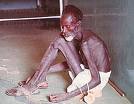
Starvation

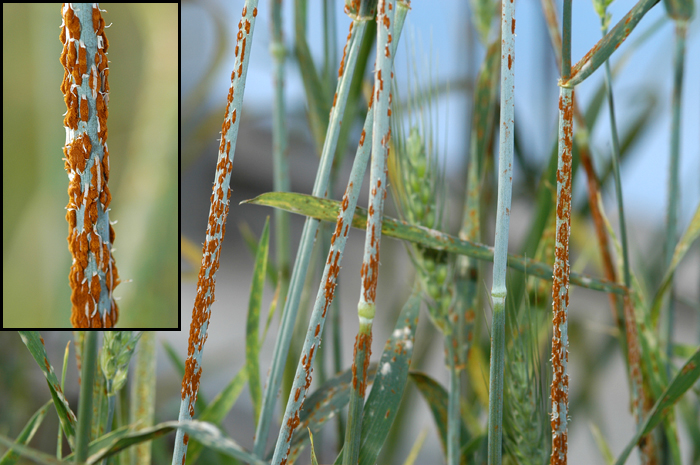
Stem rust of wheat was responsible for massive epidemics on wheat during the early 20th Century in North America. In the mid-1950s, wheat breeders developed wheat that had genetic resistance to the disease, making it all but disappear. Despite this success, a new, virulent strain of wheat stem rust, Ug99, evolved in Uganda and has already spread into Kenya, Ethiopia and Yemen, with the potential to spread into Pakistan, India, and China, and eventually North America.

Wheat Stem Rust

“This new race could attack wheat varieties in many countries and could virtually overcome most of the wheat resistant varieties around the globe,” said David Marshall, research leader with the USDA-ARS, Raleigh, NC.

According to Marshall, if this new strain were to reach regions at risk, it could create epidemics more severe than farmers have encountered in decades and destroy farmers’ harvests in wheat-producing areas worldwide.

More…

From China to Panama, a Trail of Poisoned Medicine

Saturday, May 5th, 2007

The kidneys fail first. Then the central nervous system begins to misfire. Paralysis spreads, making breathing difficult, then often impossible without assistance. In the end, most victims die.

Poison !

Many of them are children, poisoned at the hands of their unsuspecting parents.

The syrupy poison, diethylene glycol, is an indispensable part of the modern world, an industrial solvent and prime ingredient in some antifreeze.

It is also a killer. And the deaths, if not intentional, are often no accident.

Over the years, the poison has been loaded into all varieties of medicine — cough syrup, fever medication, injectable drugs — a result of counterfeiters who profit by substituting the sweet-tasting solvent for a safe, more expensive syrup, usually glycerin, commonly used in drugs, food, toothpaste and other products.

Toxic syrup has figured in at least eight mass poisonings around the world in the past two decades. Researchers estimate that thousands have died. In many cases, the precise origin of the poison has never been determined. But records and interviews show that in three of the last four cases it was made in China, a major source of counterfeit drugs.

Panama is the most recent victim. Last year, government officials there unwittingly mixed diethylene glycol into 260,000 bottles of cold medicine — with devastating results. Families have reported 365 deaths from the poison, 100 of which have been confirmed so far. With the onset of the rainy season, investigators are racing to exhume as many potential victims as possible before bodies decompose even more.

Panama’s death toll leads directly to Chinese companies that made and exported the poison as 99.5 percent pure glycerin.

More…

– This article is from the NY Times and they insist that folks have an ID and a PW in order to read their stuff. You can get these for free just by signing up. However, recently, a friend of mine suggested the website bugmenot.com :arrow: as an alternative to having to do these annoying sign ups. Check it out. Thx Bruce S. for the tip.

– Not worried yet? Go back and read these earlier posts and see if you can squint and, perhaps, see a pattern beginning to emerge. The cause of problems like this is putting profit before all else including people. And the results of the problem may be your health or the health of someone you love.

– When people tell you that we should fully unleash the power of the market. When people tell you that the market can provide for any need that arises without the need or governmental intervention. When people tell you that we’ll all be better off if we give ourselves fully to the benefits of Globalization. When they tell you all of that, if it sounds reasonable to you, go back and read these articles again. Maybe you missed something.

– I’ve tagged this post with the categories of ‘Perfect Storm‘ and Culture – How not to do it‘ because any form of governance which sets profit before people is not in the best interest of the people so governed and governments and organizations with that orientation (read corporations) are contributing to the coming Perfect Storm by ignoring humanity’s peril for their profit (stupid and short-sighted as it might seem).

Latest IPCC Report is out now

Saturday, May 5th, 2007

– The UN started these IPCC (Intergovernmental Panel on Climate Change) reports in 1988 and they come out approximately every five years. This is the IPCC’s Fourth Assesment Report. Previous reports came out as follows:

IPCC First Assesment Report 1990
IPCC Second Assesment Report 1995
IPCC Third Assesment Report 2001

– Within each report, there are multiple working groups, each with a different focus and they each release their own sub-reports at various times during the reporting year.

– What we’re looking at here in this post is the IPCC Fourth Assesment Report, Working Group III.

– In the Fourth IPCC Assesment Report the working group’s specific focuses were as follows:

Working Group I – Physical Science Basis of Climate Change
Working Group II – Impacts, Adaptation and Vulnerability
Working Group III – Mitigation

– Working Group III’s Mitigation sub-report is where we are now in the sequence.

– For a complete breakdown/overview on the IPCC Reports, go here:

– This stuff is the subject of huge debates among nations, between scientists, within the Blogosphere and anywhere else where people have formed opinions or have vested interests in the implications. Therefore I’m not going to try to report on it. Rather, I’m just going to collect reports and POVs and enumerate them below as I find them.

————————————

– Wikipedia overview of the IPCC Reports up to and including the fourth one.
– The actual IPCC Fourth Assessment Report, Working Group III document (PDF)
– Report from the Sietch Blog (only 8 years and counting left)
– From Scientific American (what will it cost to fix it?)
– From the Climate Progress Blog (countries are avoiding responsibility)
– From the Climate Progress Blog (US & China resisting global efforts)
– From the Climate Progress Blog (Highlights of the IPCC’s Mitigation Report)

————————————

– One thing I noticed is that there do not seem to be as many articles and commentaries on this sub report as on the last. One wonders if the subject material (mitigation) is just inherently less interesting or if people are just getting bored with the entire business.

– The more I think about these things, the more I keep circling back around to the idea that since humans are the cause of the world’s environmental problems, the need to develop a deep and consilient understanding of human nature is probably one of the most effective and obvious approaches we can make to solving our problems. In this context, Evolutionary Psychology seems to me to hold a particular promise.

Pakistan downplays radioactive ad

Friday, May 4th, 2007

WHAT?

I think only Alfred E. Neuman of Mad Magazine and a couple of severely retarded or gullible people would remain unworried after this strange bit of business.

————————————

Pakistan’s nuclear authority has said there is no cause for concern after it published press adverts for information on “lost” radioactive material.

Pakistan Ad|||||Alfred E. Newman - What me worry?

The adverts urged members of the public to inform officials if they found any “lost or stolen” radioactive material.

They were published in major Urdu-language newspapers in Pakistan.

A spokesman for the nuclear authority said that there was a “very remote chance” that nuclear materials imported 40-50 years ago were unaccounted for.

International concern over the safety of Pakistan’s nuclear programme was expressed in 2004, when the country’s top nuclear scientist, AQ Khan, confessed to leaking secrets to Iran, North Korea and Libya.

Dr Khan was subsequently placed under virtual house arrest, and is now suffering from pancreatic cancer.

‘Cradle to the grave’

Officials on Wednesday were keen to reassure the outside world that the latest incident in no way has the makings of another nuclear scandal, and that no radioactive material had been stolen, lost or gone missing.

But officials say they need to heighten public awareness of nuclear issues to ensure that decades-old nuclear material is fully accounted for.

More…

– Mmmmm. I don’t know about you, but I’m feeling much more reassured now that they’ve explained themselves. Yah sure, ya betcha.

Mt Cook glaciers ‘permanently damaged’ by climate change

Friday, May 4th, 2007

Mt. Cook & Glaciers - New Zealand

New Zealand’s famed Mount Cook glaciers are so affected by a warming climate they will never return to their former splendour, a New Zealand glaciologist has said.

Glaciologist Dr Trevor Chinn, who has been studying the Mount Cook structures since the 1960s, said some had already shrunk up to five kilometres, about 20 per cent, and it was too late for any of them to completely recover.

He said that while some of the world’s glaciers would grow back if the climate cooled to its pre-global warming levels, those fronting lakes, like some at Mount Cook, would not.

“You can’t get a re-advance that will come back if you apply the previous climate … a re-advance across a lake is difficult because the ice breaks off the front of the glacier and floats away,” Chinn said.

He said local warming since the 1890s had started the trend, but man-made climate change in recent decades had exacerbated the effect.

“They will never completely go. For that to happen the climate has to warm enough for the snowline to rise clean above the mountains, but they will retreat quite a bit more,” he said.

More…

China gas emissions ‘may pass US’

Thursday, May 3rd, 2007

China could overtake the US this year as the world’s largest emitter of greenhouse gases, a leading international energy group has said.

The International Energy Agency had predicted China’s carbon dioxide emissions would pass the US by 2010.

But IEA chief economist Fatih Birol said the rate of China’s economic growth this year defied expectations.

His comments come days after a Chinese government report warned of the impact of climate change on the country.

The report, compiled by several government bodies, said that higher temperatures would lead to worsening droughts, spreading deserts and reduced water supplies.

But it stopped short of recommending cuts in greenhouse gas output and risking the country’s economic growth.

More…

Food Imports Often Escape Scrutiny

Tuesday, May 1st, 2007

– I’m a former systems analyst. I spent years digging around in software systems and learning all the ways things can go wrong in systems. As I’ve been writing and thinking about the world’s gathering problems these last years, a strong revelation has been growing on me: many of our problems are caused because we put profits before people.

– Now, don’t get me wrong – I’m not against Capitalism. It is the prime engine of creativity and wealth generation in today’s world. What I am against, however, is letting Capitalism sit at the top of the decision maker’s priority pile.

– In my opinion, we can and should decide for ourselves what kind of a world we want to live in. I’d prefer to live in one in which the good of people and the environment they live in is the paramount concern and Capitalism has to take a back seat to that. That still leaves a huge playing field for Capitalism and it wouldn’t disadvantage Capitalists either, so long as the entire world played by the same rules thus generating a level playing field for the competitors.

– So, back to this story. Food imports – many of them coming out of China – are now making up a significant portion of what we Americans are eating. And there’s lack supervision and inspection of what’s coming into the country bound for our tables. China was recently found to be putting chemicals into the wheat glutens they sell to us to improve the ‘apparent’ protein content to the material and thus improve its price. I read the other day that this is an ‘open secret’ in China – everyone’s doing it.

– The Chinese, like profit obsessed Capitalists everwhere, are willing to play fast and loose with things that affect human welfare and health to boost their bottom line. And why shouldn’t they? After all, they subscribe to the theory that profit comes first – and all else (including the welfare of other people) takes second place.

– Here in the US, we have the FDA which attempts to inspect our incoming food. But it is woefully under funded and understaffed. Why? Its activities are seen by Capitalist oriented minds here as being a money sink rather than a source so they fund it as little as they can to give the appearance that we have a strong and vibrant FDA providing good and necessary services for the good of the people – when it fact, we have a hobbled and lame FDA which is much more a cardboard store-front than it is an agency fully staffed and funded in a manner commensurate with its assigned duties and responsibilities.

– You watch. There will be a crises at some point where some crap from China or some other place with lax standards, slips into our food supplies and people die. And then there will be a most amazing display of shock and outrage on Capital Hill as everyone, who previously was content to ignore the FDA’s plight, suddenly wants to know, “How the hell this could happen?”. Watch – it’ll be great and instructive theater on why we should begin to rearrange the priorities of our societies away from Capitalistic dominant models to something else that acknowledges that people are what this planet’s resources and our governments should be primarily about.

– Here an axiomatic thought to ponder: You cannot simultaneously have two or more number one priorities.

——————————————

Early in the 20th century, the safeguarding of food at American ports often amounted to inspectors from the Food and Drug Administration prying open containers of molasses or sugar and examining them for mold or insect parts.

The F.D.A. has come a way since then. But not much more.

Last year, inspectors sampled just 20,662 shipments out of more than 8.9 million that arrived at American ports. China, which in one decade has become the third-largest exporter of food, by value, to the United States, sent 199,000 shipments, of which less than 2 percent were sampled, former officials with the agency said.

Now, as F.D.A. inspectors travel to China to investigate the source of contaminated pet food that has killed at least 16 dogs and cats and sickened thousands of others, critics in Washington are warning that the agency is woefully understaffed and underfinanced to keep America’s food supply safe.

“The public thinks the food supply is much more protected than it is,” said William Hubbard, a former associate commissioner who left in 2005 after 27 years at the agency. “If people really knew how weak the F.D.A. program is, they would be shocked.”

Globalization and new manufacturing capabilities have changed the makeup of the food that Americans put on their table. Food processors in the United States are buying a greater number of ingredients from other countries, becoming more of an assembler in the nation’s food supply chain.

“With globalization, American food processors are turning to less-developed countries to get food ingredients because they can get them so much more cheaply,” Mr. Hubbard said.

More…

– This article is from the NY Times and they insist that folks have an ID and a PW in order to read their stuff. You can get these for free just by signing up. However, recently, a friend of mine suggested the website bugmenot.com :arrow: as an alternative to having to do these annoying sign ups. Check it out. Thx Bruce S. for the tip.