Archive for the ‘The Perfect Storm’ Category

SATELLITES SHOW OVERALL INCREASES IN ANTARCTIC SEA ICE COVER

Sunday, December 16th, 2007

While recent studies have shown that on the whole Arctic sea ice has decreased since the late 1970s, satellite records of sea ice around Antarctica reveal an overall increase in the southern hemisphere ice over the same period. Continued decreases or increases could have substantial impacts on polar climates, because sea ice spreads over a vast area, reflects solar radiation away from the Earth’s surface, and insulates the oceans from the atmosphere.

In a study just published in the Annals of Glaciology, Claire Parkinson of NASA’s Goddard Space Flight Center analyzed the length of the sea ice season throughout the Southern Ocean to obtain trends in sea ice coverage. Parkinson examined 21 years (1979-1999) of Antarctic sea ice satellite records and discovered that, on average, the area where southern sea ice seasons have lengthened by at least one day per year is roughly twice as large as the area where sea ice seasons have shortened by at least one day per year. One day per year equals three weeks over the 21-year period.

“You can see with this dataset that what is happening in the Antarctic is not what would be expected from a straightforward global warming scenario, but a much more complicated set of events,” Parkinson said.

More:

New Study Increases Concerns About Climate Model Reliability

Saturday, December 15th, 2007

A definite CounterCurrents category post.

= = = = =

ScienceDaily (Dec. 12, 2007) — A new study comparing the composite output of 22 leading global climate models with actual climate data finds that the models do an unsatisfactory job of mimicking climate change in key portions of the atmosphere.

This research, published online in the Royal Meteorological Society’s International Journal of Climatology, raises new concerns about the reliability of models used to forecast global warming.

“The usual discussion is whether the climate model forecasts of Earth’s climate 100 years or so into the future are realistic,” said the lead author, Dr. David H. Douglass from the University of Rochester. “Here we have something more fundamental: Can the models accurately explain the climate from the recent past? “It seems that the answer is no.”

Scientists from Rochester, the University of Alabama in Huntsville (UAH) and the University of Virginia compared the climate change “forecasts” from the 22 most widely-cited global circulation models with tropical temperature data collected by surface, satellite and balloon sensors. The models predicted that the lower atmosphere should warm significantly more than it actually did.

“Models are very consistent in forecasting a significant difference between climate trends at the surface and in the troposphere, the layer of atmosphere between the surface and the stratosphere,” said Dr. John Christy, director of UAH’s Earth System Science Center. “The models forecast that the troposphere should be warming more than the surface and that this trend should be especially pronounced in the tropics.

“When we look at actual climate data, however, we do not see accelerated warming in the tropical troposphere. Instead, the lower and middle atmosphere are warming the same or less than the surface. For those layers of the atmosphere, the warming trend we see in the tropics is typically less than half of what the models forecast.”

More:

Thx: MD

Current Melting Of Greenland’s Ice Mimicks 1920s-1940s Event

Saturday, December 15th, 2007

A possible candidate for the CounterCurrents category but a close reading of the article makes me think not.

= = = = = = = = = = =

ScienceDaily (Dec. 13, 2007) — Two researchers here spent months scouring through old expedition logs and reports, and reviewing 70-year-old maps and photos before making a surprising discovery: They found that the effects of the current warming and melting of Greenland’s glaciers that has alarmed the world’s climate scientists occurred in the decades following an abrupt warming in the 1920s.

Their evidence reinforces the belief that glaciers and other bodies of ice are exquisitely hyper-sensitive to climate change and bolsters the concern that rising temperatures will speed the demise of that island’s ice fields, hastening sea level rise.

The work, recently reported at the annual meeting of the American Geophysical Union in San Francisco , may help to discount critics’ notion that the melting of Greenland ‘s glaciers is merely an isolated, regional event.

They recently recognized from using weather station records from the past century that temperatures in Greenland had warmed in the 1920s at rates equivalent to the recent past. But they hadn’t confirmed that the island’s glaciers responded to that earlier warming, until now.

More:

Are We on the Brink of a ‘New Little Ice Age?’

Saturday, December 15th, 2007

This article, first published by the Woods Hole Oceanographic Institution on February 10th, 2003, is about the Thermohaline Circulation System – though they do not explicitly use that phrase within the article.

This could be considered a CounterCurrents article because the general expectation is that Global Warming will make the world warmer everywhere but, in fact in some places, it might get considerably colder – which seems very counter-intuitive.

If you don’t know about the possibility that the North Atlantic region could get a lot cooler as a a result of Global Warming, then this is a great article for you.

= = = = = = = = =

By Terrence Joyce, Senior Scientist, Physical Oceanography and Lloyd Keigwin, Senior Scientist, Geology & Geophysics

When most of us think about Ice Ages, we imagine a slow transition into a colder climate on long time scales. Indeed, studies of the past million years indicate a repeatable cycle of Earth’s climate going from warm periods (“interglacial”, as we are experiencing now) to glacial conditions.

The period of these shifts are related to changes in the tilt of Earth’s rotational axis (41,000 years), changes in the orientation of Earth’s elliptical orbit around the sun, called the “precession of the equinoxes” (23,000 years), and to changes in the shape (more round or less round) of the elliptical orbit (100,000 years). The theory that orbital shifts caused the waxing and waning of ice ages was first pointed out by James Croll in the 19th Century and developed more fully by Milutin Milankovitch in 1938.

Undefined Ice age conditions generally occur when all of the above conspire to create a minimum of summer sunlight on the arctic regions of the earth, although the Ice Age cycle is global in nature and occurs in phase in both hemispheres. It profoundly affects distribution of ice over lands and ocean, atmospheric temperatures and circulation, and ocean temperatures and circulation at the surface and at great depth.

Since the end of the present interglacial and the slow march to the next Ice Age may be several millennia away, why should we care? In fact, won’t the build-up of carbon dioxide (CO²) and other greenhouse gasses possibly ameliorate future changes?

Indeed, some groups advocate the benefits of global warming, including the Greening Earth Society and the Subtropical Russia Movement. Some in the latter group even advocate active intervention to accelerate the process, seeing this as an opportunity to turn much of cold, austere northern Russia into a subtropical paradise.

Evidence has mounted that global warming began in the last century and that humans may be in part responsible. Both the Intergovernmental Panel on Climate Change (IPCC) and the US National Academy of Sciences concur. Computer models are being used to predict climate change under different scenarios of greenhouse forcing and the Kyoto Protocol advocates active measures to reduce CO² emissions which contribute to warming.

Thinking is centered around slow changes to our climate and how they will affect humans and the habitability of our planet. Yet this thinking is flawed: It ignores the well-established fact that Earth’s climate has changed rapidly in the past and could change rapidly in the future. The issue centers around the paradox that global warming could instigate a new Little Ice Age in the northern hemisphere.

Evidence for abrupt climate change is readily apparent in ice cores taken from Greenland and Antarctica. One sees clear indications of long-term changes discussed above, with CO² and proxy temperature changes associated with the last ice age and its transition into our present interglacial period of warmth. But, in addition, there is a strong chaotic variation of properties with a quasi-period of around 1500 years. We say chaotic because these millennial shifts look like anything but regular oscillations. Rather, they look like rapid, decade-long transitions between cold and warm climates followed by long interludes in one of the two states.

The best known example of these events is the Younger Dryas cooling of about 12,000 years ago, named for arctic wildflower remains identified in northern European sediments. This event began and ended within a decade and for its 1000 year duration the North Atlantic region was about 5°C colder.

More:

Bali Progress, DC Deadlock

Saturday, December 15th, 2007

I haven’t written much on the meetings in Bali this past week. They turned out, perhaps, a bit better than I expected – but that isn’t saying much. The gap between what was agreed, and thus considered to be put into motion, and what actually needs to be done ASAP is, as I expected, huge.

The various countries debated about who should do what, who was responsible for what and how much should be mandatory and how much voluntary.

Does that sound like a good game plan for those who are suppose to represent our interests to come up with?  I don’t think so – not when all of us are bound together on this planet for a planet-wide disaster?  But, it’s really about what I expected.

Here’s the Council of Foreign Relations take on the agreement and its prospects in Washington, D.C.  They say it all a lot better than I could.

= = = = = = =

Updated: December 15, 2007
Author: Toni Johnson

While a compromise deal was reached on global climate policy in Bali (LATimes), the Democratic and Republican U.S. lawmakers who attended the international climate policy conference know their work is just beginning. Barbara Boxer (D-CA), head of the Senate’s environment committee, assured Bali delegates “change is already happening in Washington.” Still, the outlook remains grim for new American climate policy in Congress. A bill that Boxer’s committee approved days before (Baltimore Sun) the Bali trip faces serious opposition from Senate Republicans who argue it will raise energy prices and cost U.S. jobs. “There are alternatives that must be considered before we move forward,” said a Republican on the panel. The climate bill could lower U.S. emissions up to 25 percent by 2020. Boxer called the bill’s approval a historic moment. But the bill may never pass, and if it does, lawmakers are unlikely to overcome an expected presidential veto. Some experts hope that similar legislation can be enacted after the next president takes office in January 2009.

In the absence of federal action, U.S. state and local governments have initiated climate proposals, some with mandatory caps. At least five hundred U.S. mayors have signed an agreement to “meet or beat” what the U.S. commitment would have been had it signed the Kyoto Protocol. Coalitions of Western states, Northeastern states, and Midwestern states—accounting for nearly half the U.S. states as well as a few Canadian provinces—have started regional initiatives, two of which seek to cut emissions 10 percent to 15 percent in the next decade. Several states already have adopted regulations capping emissions from power plants and car makers. California has enacted a law that caps emissions from all economic sectors (AP), which could reduce emissions by 25 percent in the next ten years.

Local and state officials say the lack of federal policy is forcing them to act. Business and industry see this trend of fragmenting climate policy as worrisome and have called on Washington lawmakers to craft federal policy. In a November speech, New York Mayor Michael Bloomberg said mayors needed to keep innovating (PDF) and to demand those in Washington join in. But the political climate there does not look suitable yet.

At Bali, new mandatory emissions targets were resisted by other nations, too (SMHerald). And the row expected between the industrialized and developing world (read: the United States and China) did indeed materialize, nearly preventing an agreement. But the Bali conference finally found enough common ground (BBC) for a compromise, brokered by the European Union, which postpones new caps for now and looks to a final package to be hammered out in 2009.

The Europeans had wanted to clearly state a commitment to cut emissions 25 percent to 40 percent below 1990 levels by 2020. U.S. pressure helped demote the language to a footnote (AFP) in the final document’s preamble. And the language only applies to ratifiers of the Kyoto Protocol, thus excluding the United States. CFR fellow Michael Levi says just because some countries seem unwilling to settle on these issues in Bali does not preclude them from agreeing to future climate rules. The talk on emissions targets continues early next year among the 17 largest economies at U.S. hosted climate talks in Hawaii, a summit which would have faced a boycott by the EU and other states had the American delegation not relented (LATimes) to the last minute deal in Bali.

To the original article:

A new category – ‘CounterCurrents’

Saturday, December 15th, 2007

The Sky is not Falling???

Fair is fair and all sides should be presented, if one believes that information is truth and information should be free.

One of my good friends, who is a bit of a skeptic on Global Warming issues, loves to find and send me articles that indicate the reverse of the trends I often blog about.

MD is a very bright guy and I know the convictions he expresses are honest ones and so I’ve decided to honor them and articles of this type by giving them their own category here on Samadhisoft – ‘CounterCurrents‘.

I’m not going to honor mindless anti-science ravers and religious nut cases. But, if I encounter, or am shown, an article that seems to be hewn from scientific hardwood and it reveals some facet of the world that would indicate the reverse of the Perfect Storm Hypothesis, then this is where you’ll find it here.

Nothing is easier than self-deceit. For what each man wishes, that he also believes to be true.
-  Demosthenes

Toll Of Climate Change On World Food Supply Could Be Worse Than Thought

Thursday, December 13th, 2007

ScienceDaily (Dec. 4, 2007) — Global agriculture, already predicted to be stressed by climate change in coming decades, could go into steep, unanticipated declines in some regions due to complications that scientists have so far inadequately considered, say three new scientific reports. The authors say that progressive changes predicted to stem from 1- to 5-degree C temperature rises in coming decades fail to account for seasonal extremes of heat, drought or rain, multiplier effects of spreading diseases or weeds, and other ecological upsets. All are believed more likely in the future. Coauthored by leading researchers from Europe, North America and Australia, they appear in a recent issue of the Proceedings of the National Academy of Sciences (PNAS).

“Many people assume that we will never have a problem with food production on a global scale. But there is a strong potential for negative surprises,” said Francesco Tubiello, a physicist and agricultural expert at the NASA/Goddard Institute of Space Studies who coauthored all three papers. Goddard is a member of Columbia University’s Earth Institute.

In order to keep pace with population growth, current production of grain–from which humans derive two-thirds of their protein–will probably have to double, to 4 billion tons a years before 2100. Studies in the past 10 years suggest that mounting levels of carbon dioxide in the air–believed to be the basis of human-caused climate change–may initially bolster the photosynthetic rate of many plants, and, along with new farming techniques, possibly add to some crop yields.

Between now and mid-century, higher temperatures in northerly latitudes will probably also expand lands available for farming, and bring longer growing seasons. However, these gains likely will be canceled by agricultural declines in the tropics, where even modest 1- to 2-degree rises are expected to evaporate rainfall and push staple crops over their survival thresholds. Existing research estimates that developing countries may lose 135 million hectares (334 million acres) of prime farm land in the next 50 years. After mid-century, continuing temperature rises–5 degrees C or more by then–are expected to start adversely affecting northern crops as well, tipping the whole world into a danger zone.

More:

Shrinking glaciers near crisis

Thursday, December 13th, 2007

New Zealand’s longest glacier has lost 5km to global warming and is expected to lose at least as much again if the climate keeps heating up.

The Tasman Glacier, the massive ice river that sweeps past Aoraki-Mt Cook, has already shrunk to 23km, from the formation of a 5km lake at its snout in the past 30 years.

In that time, New Zealand’s glaciers have lost almost 11 per cent – 5.8 cubic kilometres – of their ice, new research released yesterday has found.

Twelve of the largest in the Southern Alps are unlikely to return to their earlier lengths without “extraordinary cooling of the climate”, says the National Institute of Water & Atmospheric Research (Niwa).

The warming climate is responsible for more than 90 per cent of the ice loss.

The report comes a day after the starkest warning yet from the Intergovernmental Panel on Climate Change, which declared the impact of global warming could be “abrupt or irreversible” and no country would be spared.

Niwa said the shrinking of New Zealand’s glaciers had continued despite there being virtually no change in the amount of snow feeding them last year.

The shrinkage of the big glaciers, mostly in the Mt Cook region, is driven mainly by the formation of glacier-snout lakes – which encourage big lumps of ice to break off and accelerate the shrinkage – and surface melting.

More:

The Story of Stuff

Thursday, December 13th, 2007

This is a brilliant little QuickTime film. It is both simple enough for kids and profound enough for thoughtful adults. Follow the link for a new way of seeing your familiar world.

_________________

The Story of Stuff
With Annie Leonard
_________________

.

Single-largest Biodiversity Survey Says Primary Rainforest Is Irreplaceable

Sunday, December 9th, 2007

Let me count the ways I have no faith in how things are going and how mankind is reacting to the looming problems.

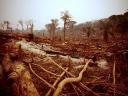
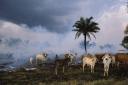
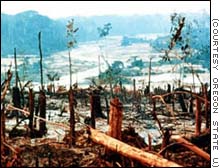
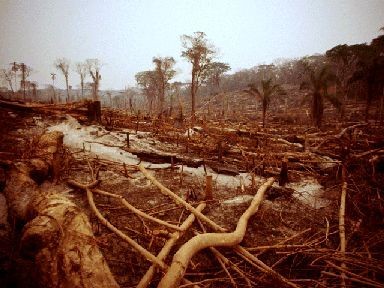
The destruction of the world’s rain forests has gone on decade after decade without abatement. The amount lost every year is well documented and much hang-wringing goes on but, still, the destruction continues.

rainforest1.jpg rainforest2.jpg


rainforest4.jpg rainforest5.jpg

There’s money in that illegal logging and there’s land to farm under those trees. There are minerals out there, hidden in the jungle. Like a great swarm of ants loose in the cupboard, we just can’t seem to find the will to leave it all alone.

One thing is for certain – we are not short of persuasive reasons to leave it alone.

But, that’s one of the big reasons to be discouraged about all of this. Reasons – good valid, solid, scientific reasons are not enough for us. Most of us will only ‘get it’ when our own houses are burning down around our ears.

Even here in New Zealand, the govrnment cannot find the moral will or political capital to ban all wood imports sourced from illegal logging. So much for their self-appointed ‘clean and green’ image.

——————————

ScienceDaily (Nov. 15, 2007) — As world leaders prepare to discuss conservation-friendly carbon credits in Bali and a regional initiative threatens a new wave of deforestation in the South American tropics, new research from the University of East Anglia and Brazil’s Goeldi Museum highlights once again the irreplaceable importance of primary rain forest.

Working in the north-eastern Brazilian Amazon the international team of scientists undertook the single-largest assessment of the biodiversity conservation value of primary, secondary and plantation forests ever conducted in the humid tropics.

Over an area larger than Wales, the UEA and museum researchers surveyed five primary rain forest sites, five areas of natural secondary forest and five areas planted with fast-growing exotic trees (Eucalyptus), to evaluate patterns of biodiversity.

Following an intensive effort of more than 20,000 scientist hours in the field and laboratory, they collected data on the distribution of 15 different groups of animals (vertebrates and invertebrates) and woody plants, including well-studied groups such as monkeys, butterflies and amphibians and also more obscure species such as fruit flies, orchid bees and grasshoppers.

“We know that different species often exhibit different responses to deforestation and so we sought to understand the consequences of land-use change for as many species as possible,” said Dr Jos Barlow, a former post-doctoral researcher at UEA.

At least a quarter of all species were never found outside native primary forest habitat – and the team acknowledges that this is an underestimate. “Our study should be seen as a best-case scenario, as all our forests were relatively close to large areas of primary forests, providing ample sources for recolonisation,” said Dr Barlow.

“Many plantations and regenerating forests along the deforestation frontiers in South America and south-east Asia are much further from primary forests, and wildlife may be unable to recolonise in these areas.

“Furthermore, the percentage of species restricted to primary forest habitat was much higher (40-60%) for groups such as birds and trees, where we were able to sample the canopy species as well as those that live in the forest under-storey.”

These results clearly demonstrate the unique value of undisturbed tropical forests for wildlife conservation. However, they also show that secondary forests and plantations offer some wildlife benefits and can host many species that would be unable to survive in intensive agricultural landscapes such as cattle ranching or soybean plantations.

More:

University of East Anglia. “Single-largest Biodiversity Survey Says Primary Rainforest Is Irreplaceable.” ScienceDaily 15 November 2007. 10 December 2007 .