Intelligence … IQ > EQ > SQ?

February 21st, 2008

– A friend of mine sent me this. It’s from Life Positive – Your complete Guide to Holistic Living.

– I think theories of what intelligence is have been badly flawed thus far and I wouldn’t claim that this article sorts the business out by any means because it is just more conjecture.  (Indeed, these folks seem a bit confused when they mention someone as having an IQ of 210.  I was under the impression that the IQ scale maxed out at 200?)

– I think we are still miles and miles from really having a scientifically derived grip on what intelligence actually is.

-But the article does make for interesting and thoughtful reading.

– – – – – – – – – – – – –

IQ and EQ give way to spiritual intelligence, the ultimate intelligence that can add value and meaning to your life

For long, the world gave much importance to Intelligence Quotient. “My son has an IQ of 210!” the proud mother would gush. “He’s going to be a scientist.” This attitude is a legacy of the early 20th century when psychologists devised tests to measure intelligence. These tests primarily measured intellectual or rational intelligence (used to solve logical problems). The higher the figure, the belief went, the greater the intelligence. In mid-1990s, Daniel Goleman revealed findings in neuroscience and psychology that stressed the importance of Emotional Quotient (EQ). This makes us aware of our feelings and that of others. It gives empathy, motivation, compassion and an ability to respond skillfully to pleasure and pain. Goleman argued that EQ was a basic requirement for the use of IQ. If the areas of our brain that feel are damaged, our ability to think effectively is diminished.

Last year, however, authors Dana Zohar and Ian Marshall introduced a new dimension to human intelligence. Spiritual Quotient (or SQ) is the ultimate intelligence, they claim. This is the intelligence used to solve problems of meaning and value. “Is my job giving me the fulfillment I seek?” “Am I relating to the people in my life in a way that contributes to their happiness and mine?” Answers to these questions determine whether we will find happiness or not. IQ and EQ are inadequate in such issues.

Spiritual intelligence,” explains Ram Mohan, a Vedanta teacher, “is about the growth of a human being. It is about moving on in life. About having a direction in life and being able to heal ourselves of all the resentment we carry. It is thinking of ourselves as an expression of a higher reality. It is also about how we look at the resources available to us. We realize that nature is not meant to be exploited. Ultimately, we discover freedom from our sense of limitation as human beings and attain moksha.”

More…

– research thx to Mike D.

Financial instability

February 21st, 2008

– One of the ‘legs’ of the Perfect Storm Hypothesis asserts that our first-world hi-tech societies are like houses of cards; being built higher and high each year and growing more unstable as we go.

nasdaq-stock-market.jpg– The increasing snarl of inter linkages and interdependencies are making the entire system more unstable. Many folks feel, however, that the additional redundancies should make it more robust but that is an irrelevancy because the deepest truth is that a chain is only as strong as its weakest link.

– The following two stories are both from the financial world and they both illustrate how something (insurance) that one would assume would make a system more robust against failure has, in these cases, actually made it more fragile.

– – – – – – – – – – – – – – –

story #1:

Bonds Unbound by James Surowiecki on the Financial Page of The New Yorker Magazine, Feb 11, 2008

story # 2:

Arcane Market Is Next to Face Big Credit Test by Gretchen Morgenson, New Yorks Times, Feb 17, 2008

– research thanks to L.A.

– The second article is from the NY Times and they insist that folks have an ID and a PW in order to read their stuff. You can get these for free just by signing up. However, a friend of mine suggests the website bugmenot.com :arrow: as an alternative to having to do these annoying sign ups. Check it out. Thx Bruce S. for the tip.

Pleas for condemned Saudi ‘witch’

February 16th, 2008

Human Rights Watch has appealed to Saudi Arabia to halt the execution of a woman convicted of witchcraft.

In a letter to King Abdullah, the rights group described the trial and conviction of Fawza Falih as a miscarriage of justice.

The illiterate woman was detained by religious police in 2005 and allegedly beaten and forced to fingerprint a confession that she could not read.

Among her accusers was a man who alleged she made him impotent.

Human Rights Watch said that Ms Falih had exhausted all her chances of appealing against her death sentence and she could only now be saved if King Abdullah intervened.

‘Undefined’ crime

The US-based group is asking the Saudi ruler to void Ms Falih’s conviction and to bring charges against the religious police who detained her and are alleged to have mistreated her.

Its letter to King Abdullah says the woman was tried for the undefined crime of witchcraft and that her conviction was on the basis of the written statements of witnesses who said that she had bewitched them.

Human Rights Watch says the trial failed to meet the safeguards in the Saudi justice system.

The confession which the defendant was forced to fingerprint was not even read out to her, the group says.

Also Ms Falih and her representatives were not allowed to attend most of the hearings.

When an appeal court decided she should not be executed, the law courts imposed the death sentence again, arguing that it would be in the public interest.

To the original:

080214 – Moving a big Japanese Maple

February 14th, 2008

My wife and I make our living running a wholesale/retail nursery (www.woodscreeknursery.com). Yes, I know selling plants and trees sounds miles off from most of what I Blog about here on Samadhisoft but it’s true – it is what we do to make our money.

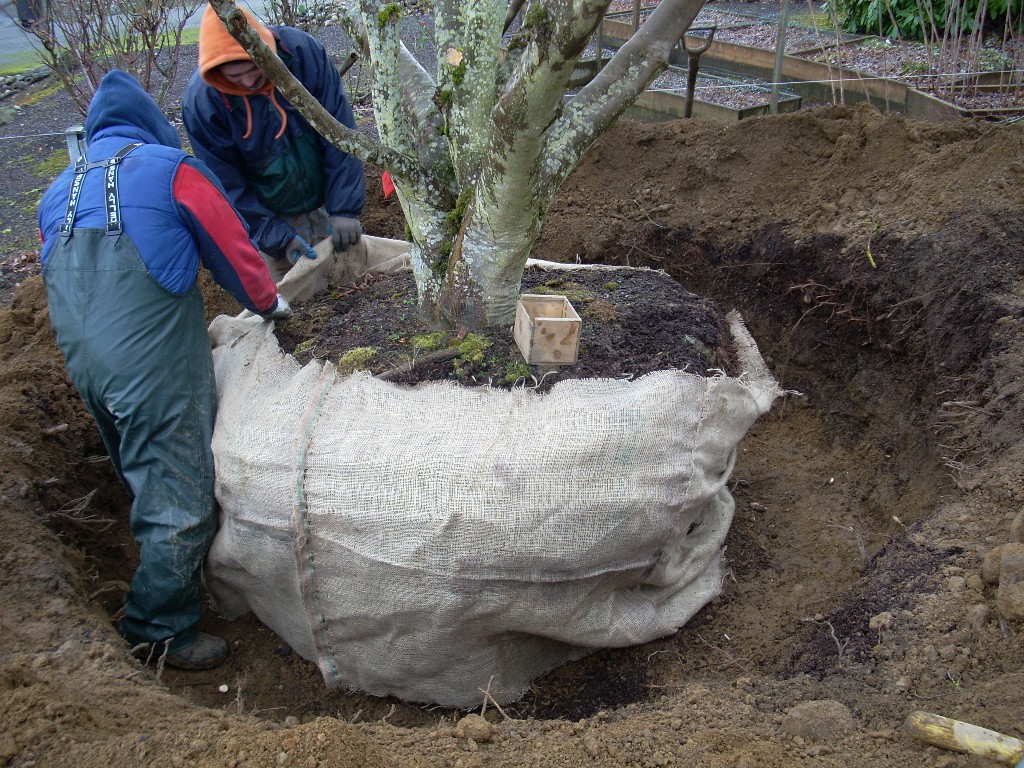
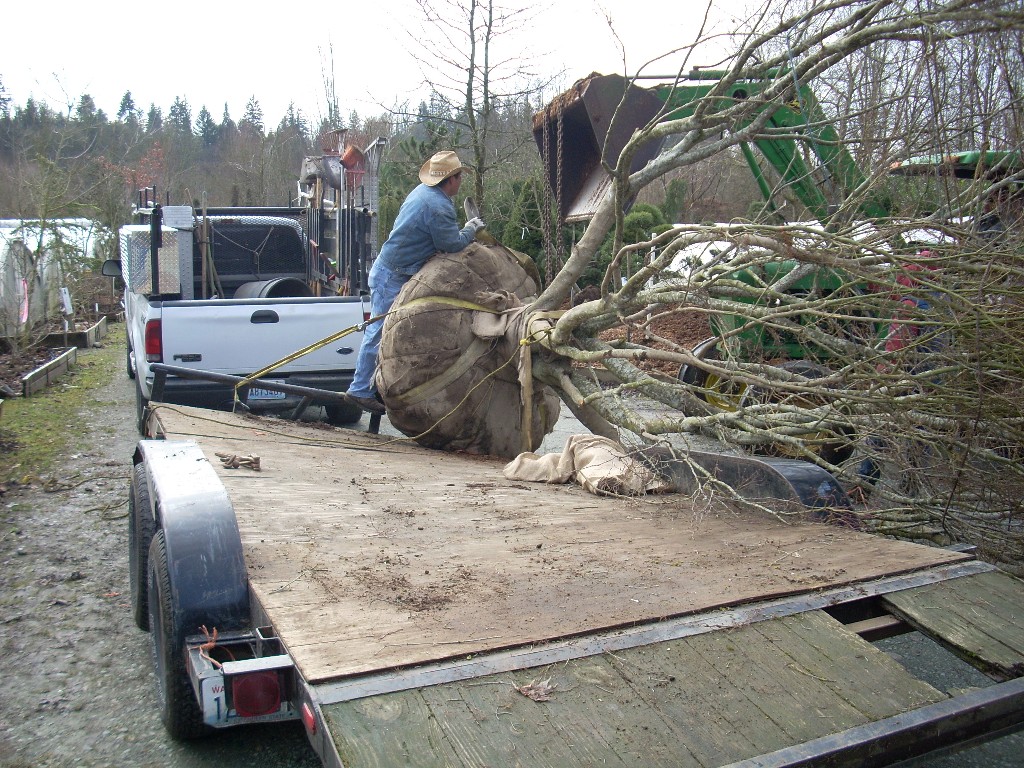
Digging it out.One of the specialty things we do is to occasionally rescue Japanese Maples. Today and yesterday, we rescued a large one from a yard in Lake Stevens about 10 miles away and brought it here to our nursery. Lifting it up.I say, ‘we’ did it but in truth my wife and I just supervised and all of the hard and skilled work was done our friend and business associate Manuel Rodriguez along with the very able assistance of two workers from our nursery; Jesus and Dino.

Transporting it.Along the way, we met a photographer and a reporter from the Herald in Everett, Washington. These two folks came out to do a story for the paper on rescuing Japanese Maples. So, that was a lot of fun for us and great advertising as well.Taking it off at the nursery.   My, that is HEAVY!

Everything went well, thanks to the skill of the people involved, and the tree is here now in our nursery safe and sound. Now, I can get back to all that pesky accounting that piled up while I was off in new Zealand.
In it’s new home and ready for spring sales.Cheers!

Birth defects warning sparks row

February 13th, 2008

A minister who warned about birth defects among children of first cousin marriages in Britain’s Asian community has sparked anger among critics.

Phil Woolas said health workers were aware such marriages were creating increased risk of genetic problems.

The claims infuriated the Muslim Public Affairs Committee (MPAC) which called on the prime minister to “sack him”.

MPAC spokesman Asghar Bukhari said Mr Woolas’ comments “verged on Islamophobia”.

Mr Woolas, an environment minister who represents ethnically-diverse Oldham East and Saddleworth, risked sparking a major row after warning the issue was “the elephant in the room”, Mr Bukhari said.

Expert analysis

Mr Woolas said cultural sensitivities made the issue of birth defects difficult to address.

The former race relations minister told the Sunday Times: “If you have a child with your cousin the likelihood is there’ll be a genetic problem.

“The issue we need to debate is first cousin marriages, whereby a lot of arranged marriages are with first cousins, and that produces lots of genetic problems in terms of disability [in children].”

Mr Woolas stressed the marriages, which are legal in the UK, were a cultural, not a religious, issue and confined mainly to families originating in rural Pakistan.

But he also told the paper: “If you talk to any primary care worker they will tell you that levels of disability among the… Pakistani population are higher than the general population. And everybody knows it’s caused by first cousin marriage.”

“Awareness does need to be raised but we are very aware of the sensitivities,” he added, pointing out that many of the people involved were the products of such marriages.

More…

Back in the U.S.A.

February 13th, 2008

32 hours of airplanes and airports.   Yahoo!   That was fun.   But, all is well.

New Zealand departure

February 9th, 2008

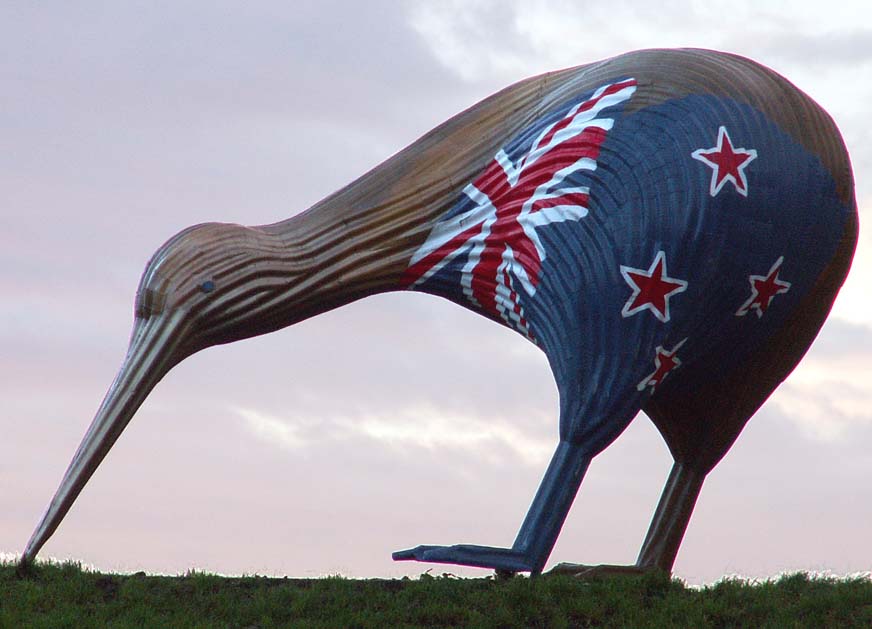
Aotearoa iconsI’m leaving New Zealand for the U.S. day after tomorrow on Tuesday. I’ve been here for three months now and it is time to return home to my other life.

I’m looking forward to seeing my wife very much. And our friends and our animals as well.

But, it’s hard to leave. I’ve made good friends here as well and I love living in this Kiwi culture.

I’ve grown discouraged with the U.S.’s corporate-driven culture the ascendancy of its religious right. And I daily grow more worried about the long term stability of our global civilization. I want to live in a simpler time and place in the remaining years that have been given me. And I think New Zealand is the place.

I will resume Blogging in a few days from the Seattle area. Until then, cheers, my friends.

Why bird flu has been kept at bay

February 9th, 2008

– This is good news. Perhaps the idea that we are only one or two small mutations away from Bird Flu evolving so it can jump from human to human is incorrect.

= = = = = = = = = = = = = = =

Scientists say they have identified a key reason why bird flu has so far not posed a widespread menace to humans.

So far, the H5N1 strain has mainly infected birds and poultry workers, but experts fear the virus could mutate to pass easily from human to human.

However, Massachusetts Institute of Technology found that to enter human respiratory cells the virus must first pick a very specific type of lock.

The study appears in the journal Nature Biotechnology.

The researchers say their discovery may help scientists better monitor changes in H5N1 – and find better ways to fight it.

Flu viruses attack by binding sugar chains, called glycans, that line the airways and lungs.

Latching on

The chemical linkages between the sugar molecules in these chains differ between humans and birds.

Until now it has been assumed that bird flu viruses would be adapt to humans simply by acquiring mutations that enable them to attach to the human types.

But Dr Ram Sasisekharan and colleagues found this step depends on the shape assumed by the flexible sugar chains rather than the type of linkage.

Bird flu viruses currently require cone-shaped glycans to infect birds, so the umbrella shape found in humans has protected most of us from avian flu.

More…

Thousands Of Crop Varieties Depart For Arctic Seed Vault

February 9th, 2008

– This is a follow up story on one I covered earlier here: and here: .

– – – – – – – – – – – –

At the end of January, more than 200,000 crop varieties from Asia, Africa, Latin America and the Middle East—drawn from vast seed collections maintained by the Consultative Group on International Agricultural Research (CGIAR)—will be shipped to a remote island near the Arctic Circle, where they will be stored in the Svalbard Global Seed Vault (SGSV), a facility capable of preserving their vitality for thousands of years.

The cornucopia of rice, wheat, beans, sorghum, sweet potatoes, lentils, chick peas and a host of other food, forage and agroforestry plants is to be safeguarded in the facility, which was created as a repository of last resort for humanity’s agricultural heritage. The seeds will be shipped to the village of Longyearbyen on Norway’s Svalbard archipelago, where the vault has been constructed on a mountain deep inside the Arctic permafrost.

The vault was built by the Norwegian government as a service to the global community, and a Rome-based international NGO, the Global Crop Diversity Trust, will fund its operation. The vault will open on February 26, 2008.

This first installment from the CGIAR collections will contain duplicates from international agricultural research centers based in Benin, Colombia, Ethiopia, India, Kenya, Mexico, Nigeria, Peru, the Philippines and Syria. Collectively, the CGIAR centers maintain 600,000 plant varieties in crop genebanks, which are widely viewed as the foundation of global efforts to conserve agricultural biodiversity.

“Our ability to endow this facility with such an impressive array of diversity is a powerful testament to the incredible work of scientists at our centers, who have been so dedicated to ensuring the survival of the world’s most important crop species,” said Emile Frison, Director General of Rome-based Bioversity International, which coordinates CGIAR crop diversity initiatives.

“The CGIAR collections are the ‘crown jewels’ of international agriculture,” said Cary Fowler, Executive Director of the Global Crop Diversity Trust, which will cover the costs of preparing, packaging and transporting CGIAR seeds to the Arctic. “They include the world’s largest and most diverse collections of rice, wheat, maize and beans. Many traditional landraces of these crops would have been lost had they not been collected and stored in the genebanks.”

For example, the wheat collection held just outside Mexico City by the CGIAR-supported International Maize and Wheat Improvement Center (CIMMYT) contains 150,000 unique samples of wheat and its relatives from more than 100 countries. It is the largest unified collection in the world for a single crop. Overall, the maize collection represents nearly 90 percent of maize diversity in the Americas, where the crop originated. CIMMYT will continue to send yearly shipments of regenerated seed until the entire collection of maize and wheat has been backed up at Svalbard.

Storage of these and all the other seeds at Svalbard is intended to ensure that they will be available for bolstering food security should a manmade or natural disaster threaten agricultural systems, or even the genebanks themselves, at any point in the future.

“We need to understand that genebanks are not seed museums but the repositories of vital, living resources that are used almost every day in the never-ending battle against major threats to food production,” Bioversity International’s Frison said. “We’re going to need this diversity to breed new varieties that can adapt to climate change, new diseases and other rapidly emerging threats.”

More…

Uproar over Archbishop’s sharia law stance

February 9th, 2008

– I’ve expressed my concerns before over the high rates of Islamic immigration into the various European countries. 3% of Britain and Germany’s populations are now Islamic. In the Netherlands and France, it stands at 6%.

– Personally, and in spite of the fact that I consider myself a liberal thinker, I do not believe that societies can stand such a high rates of immigration – especially when the newcomers do not particularly care to be assimilated into their new country’s culture and strive, instead, to import and preserve their own culture in the midst of their host’s. And then, on top of that, you have the deeply uncomfortable fact that sincere Islamic believers believe that their religion is right and that all the others are wrong. It’s not a formula for evolving a harmonious multi-cultural society – it’s a formula for a culture war.

– I think it is right to offer hospitality to your guests. But I think the guests have a responsibility as well to respect your house if they want to be there. I think it’s reckless to invite someone in who has already declared that they think how you live and worship is wrong and who covets your house and the destruction of your society.

= = = = = = = = = = = = = = = = =

The Archbishop of Canterbury has been widely criticised after he called for aspects of Islamic sharia law to be adopted in Britain.

Dr Rowan Williams said that it “seems inevitable” that elements of the Muslim law, such as divorce proceedings, would be incorporated into British legislation.

The Archbishop’s controversial stance has received widespread criticism from Christian and secular groups, the head of the equality watchdog, several high-profile Muslims and MPs from all parties.

Amid the storm of protest, Downing Street moved quickly to distance itself from the Archbishop’s remarks, insisting that British law would and should remain based on British values.

A spokesman for Mr Brown said: “Our general position is that sharia law cannot be used as a justification for committing breaches of English law, nor should the principles of sharia law be included in a civil court for resolving contractual disputes.

More…